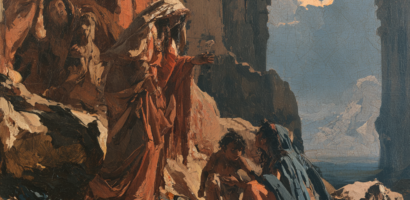


My dear readers, as we enter the month of December, we will take a brief pause from our journey through the Book of Genesis. I promise that right after the holidays we will return to Bereishit and continue unearthing its hidden treasures together. But now, as winter deepens and the lights of Chanukkah and Christmas begin to glow, I would like to reflect on these two remarkable festivals.
This year, Chanukkah and Christmas do not overlap. Chanukkah begins ten days earlier, and Christmas arrives only after the last chanukkiah has been extinguished. And yet, even when the dates do not coincide, the message of these two celebrations meets in a profound way: the triumph of Light over darkness. Let us begin with Chanukkah, since it greets us first this year, and then turn to Christmas to understand how deeply their meanings intertwine.
CHANUKKAH: THE LIGHT THAT WINS
For many people today, Chanukkah is associated primarily with dreidels, latkes, presents, and childhood memories. But at its heart, Chanukkah is Chag Ha-Urim—the Festival of Lights. The message of Chanukkah is simple and yet astonishingly deep: The Divine Light shines in the darkest of darkness, and the darkness cannot overcome it.
The Story Behind the Festival: What the Scriptures Tell Us
The historical story of Chanukkah is preserved in the First and Second Books of the Maccabees. And here we encounter a surprising fact: these books were never included in the Hebrew Bible. Had they not been preserved in the Septuagint and adopted by early Christians into the Catholic and Orthodox canons, we might know very little about Chanukkah today. Surprisingly, another source telling us about Chanukkah is New Testament: even those Protestant Bibles that do not include Maccabees, still mention Chanukkah directly in John 10:22–23, where Yeshua Himself is found in Jerusalem during “the Feast of Dedication.”
It seems that God ensured that Chanukkah would be known to the followers of Jesus, even if the Hebrew canon did not preserve it. And the reason becomes clearer the more we understand the story.
Persecution, Defiance, and an Impossible Victory
In the 2nd century BCE, under the Seleucid ruler Antiochus Epiphanes, Jewish life was pushed to the brink. Sabbath observance, circumcision, and the dietary laws were outlawed under penalty of death. Pagan worship was being forced upon the population. Soldiers traveled from town to town demanding sacrifices to Greek gods.
When they reached the village of Modein and insisted that the elderly priest Mattityahu offer pagan sacrifices, he famously replied:
“We will not obey the king’s words by turning aside from our religion to the right or to the left.” (1 Macc. 2:22)
He and his sons fled to the Judean hills, and many faithful Jews joined them. The Maccabean Revolt was born.
Their chances of success were, realistically, nonexistent. The Syrian army numbered tens of thousands. This was another David-and-Goliath moment in Jewish history. And yet, against all odds, the Maccabees prevailed. They retook the Temple. They cleared out the desecration. They rebuilt the altar. And on the 25th of Kislev, they rededicated the House of the Lord.
The Legend and the Silence
Here we meet another surprising detail.
In the earliest accounts—the eyewitness testimonies of First Maccabees—there is no mention of the miracle of the oil.
Not a word.
The people celebrated for eight days, offering sacrifices and giving thanks, but no explanation is given. The famous miracle appears only later, in Rabbinic literature, shifting Chanukkah from a celebration of military victory to a celebration of Divine Light.
And that shift is deeply meaningful. Even after the Temple’s rededication, the war was far from over. Antiochus was still their ruler. Jerusalem was still largely occupied. The situation remained dark. And yet—light shone in the darkness, even if the darkness had not yet disappeared.
This is the spirit of Chanukkah:
Light that begins small, in the midst of overwhelming darkness, and grows stronger night by night.
When we light the chanukkiah, we begin with a single flame in the darkness. Then two. Then three. A quiet defiance of despair. A whispered promise that darkness will not have the final word. And this, I believe, is why God made sure Chanukkah survived in Christian scripture. Without understanding Chanukkah, we miss the fuller depth of the season that follows it. But once again, The Light revealed at Chanukkah prepares our hearts for the Light proclaimed at Christmas.
CHRISTMAS: THE LIGHT THAT ENTERS THE WORLD
This year, Christmas comes ten days after Chanukkah ends. But once again, while the two holidays are quite different in origin, they share the same central message: the arrival of Light into a dark world.
A Non-Biblical Date with a Biblical Message
Like Chanukkah, Christmas is not listed among the biblical festivals in Leviticus 23. The exact date of Jesus’ birth is not recorded. Early believers did not celebrate it. Only several centuries later did the Church choose December 25—likely to Christianize existing winter festivals.
Does this render Christmas meaningless? Not at all.
In fact, the chosen date carries a profound meaning: December 25 is the time of year when the world is darkest. The winter solstice marks the moment when the sun begins its return. In the very darkest days, a new light begins to grow.
This is the message of Isaiah:
“Watchman, what of the night?”
“The morning comes, but also the night.”
Humanity longs for dawn. God answers with Light.
When Was the Silent Night?
Scholars widely agree that Jesus was not born in December. The Gospels themselves point to a different season:
- 1. Shepherds would not be sleeping outdoors in December—the Judean winter nights are cold, wet, and harsh.
2. A census would not be held in winter—travel would be too difficult.
3. The priestly division of Abijah, to which Zechariah belonged, served in June, placing John’s birth in March and Jesus’ birth six months later—most likely September.
This timing suggests that Jesus was born during Sukkot—the Feast of Tabernacles.
The clues are compelling:
- Sukkot is called zman simchateinu—“the season of our joy.”
The angels proclaim “great joy for all people.” - John writes: “The Word became flesh and tabernacled among us.”
- Joseph and Mary may have traveled with the pilgrimage caravans.
- Bethlehem, close to Jerusalem, would have been crowded with pilgrims, explaining “no room” in the guest area.
Most importantly, the Holy Family would never have been abandoned. Hospitality in ancient Judea was sacred. They likely stayed in a lower room of a family home—the place where animals were kept at night for warmth—before returning to the main living area after the birth.
This is the Nativity as it truly happened:
not a Western tableau, but a deeply Jewish story, unfolding in a crowded Judean home during the season of Sukkot.
Why Celebrate Christmas at All?
Because even if December 25 is not the bibical date, it expresses a biblical truth:
In the world’s darkest hour, the Light of the World is revealed.
Just as Chanukkah celebrates light in the darkness of oppression, Christmas celebrates divine Light in the darkness of sin and suffering.
Both festivals proclaim:
God’s Light enters the world not after the darkness is gone, but precisely while the darkness still surrounds us.
TWO FESTIVALS, ONE MESSAGE
Chanukkah and Christmas do not fall on the same days this year. One begins as the other ends. And yet, how beautifully their themes converge.
Chanukkah proclaims:
“The darkness is deep, but the Light of God wins.”
Christmas proclaims:
“A great Light has come into the world, and the darkness cannot overcome it.”
Chanukkah begins with a single flame.
Christmas speaks of the Light of the World.
Chanukkah celebrates the rededication of God’s Temple.
Christmas reveals God tabernacling among us.
Both festivals remind us:
Light wins. Always.
As we stand in this December season—first by the soft glow of the hanukkiah, then by the warm radiance of Christmas lights—we join countless generations who have proclaimed the triumph of God’s Light over the world’s darkness.
And so, my dear readers, with all my heart:
Chag Urim Sameach!
Merry Christmas!
May the Light of God shine upon you and within you this season!
If you like the insights on this blog, you might enjoy my books, you can find them here: books. As always, I would be happy to provide more information (also, a teacher’s discount for new students) regarding our wonderful courses (juliab@eteachergroup.com)