


Discover the manuscripts that changed biblical studies
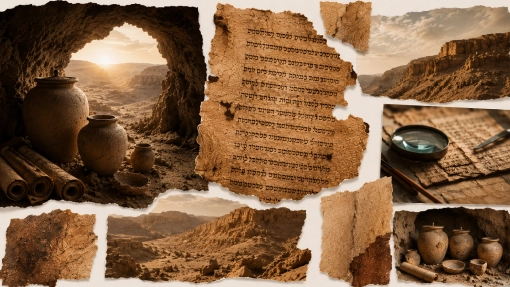
Explore the dramatic discovery of the Dead Sea Scrolls and learn why they became one of the greatest archaeological finds in biblical history.
Discovered in the caves of the Judean Desert, the Dead Sea Scrolls opened a remarkable window into the biblical world. In this course, you’ll explore their dramatic discovery, lost biblical texts, apocalyptic visions, messianic hopes, angelic realms, and the mysterious Qumran community. From Genesis retold to echoes in the Gospels, Paul, and rabbinic thought, you’ll see how these ancient manuscripts illuminate the roots of Judaism and Christianity—and why they still matter today.
Listen to inspiring student testimonials revealing the life-changing insights and profound growth gained through their biblical studies journey.
"Nothing is perfect in life, but many things are excellent. eTeacher offers much, including growth and understanding not only about the subject material, but different teaching styles ... and different…
"The quality teaching given by Francois has been as asset to learning and comprehension. The clarity of my understanding has been enriched and I am the richer. Having opened up…
"The Biblical Hebrew course is in a league if it's own. My teacher is amazing and very encouraging. It is a delight to return to class week after week and…
"Up to now I have had excellent teachers. My classmates have been very supportive and the atmosphere has been very good. Not always easy but with the right commitment everybody…
"This is an excellent way to extend one's knowledge of the Bible and it puts biblical stories in context helping us not only to imagine where these took place but…
Journey into the caves of Qumran and discover how ancient fragments reveal lost texts, hidden debates, bold hopes, and a fascinating world that shaped Judaism and Christianity.
Explore the dramatic discovery of the Dead Sea Scrolls and learn why they became one of the greatest archaeological finds in biblical history.
Meet the mysterious community behind the scrolls. Discover how they lived, worshiped, celebrated biblical festivals, and why many scholars believe they expected the coming Messiah.
Find out how the Dead Sea Scrolls shed new light on Genesis, Isaiah, the Psalms, messianic prophecy, the Gospels, Paul, and even the origins of rabbinic Judaism.
Reading Scripture in Hebrew transforms your Bible study as ancient words reveal God's deeper message, strengthening your connection to faith's foundational roots.
Get to know our experienced faculty members, specializing in Biblical studies with degrees from prestigious universities worldwide. They will support your learning journey every step of the way.
Chat with our academic advisors to help find the path that best aligns with your goals.
This 30-session course explores the Dead Sea Scrolls as one of the most important archaeological and religious discoveries of the modern era. Students will study the dramatic discovery of the scrolls, the caves of Qumran, the biblical manuscripts found there, and the beliefs and practices of the community connected to them. The course examines major themes such as apocalyptic visions, heavenly battles, messianic expectation, purity, sacrifice, wisdom, prophecy, temple theology, angels, women and families, and the “remnant” of Israel. It also looks at how the scrolls echo across Jewish and Christian traditions, including the Gospels, Paul, rabbinic thought, and later religious interpretation. By the end of the course, students will understand why these ancient fragments continue to reshape how we read the Bible, the history of Judaism, and the origins of Christianity.
This session will introduce the dramatic discovery of the Dead Sea Scrolls by Bedouin shepherds in the caves of the Judean Desert. We will consider why the discovery attracted worldwide attention and how these ancient manuscripts opened an unprecedented window onto the biblical and religious worlds of more than 2,000 years ago.
This session will explore the biblical manuscripts found among the Dead Sea Scrolls and what they reveal about the Bible in antiquity. We will consider how the discoveries at Qumran broaden our understanding of biblical texts and offer evidence for the ways Scripture was copied, preserved, and read.
This session will examine the scrolls’ dramatic vision of a cosmic struggle between the forces of light and darkness. We will explore how this conflict shaped the community’s understanding of history, human identity, divine judgment, and its own place within God’s unfolding purposes.
This session will investigate how the scrolls connect earthly events with conflicts taking place in the heavenly realm. We will consider the roles assigned to human communities, angels, and opposing spiritual forces within the scrolls’ understanding of warfare, history, and the final triumph of good over evil.
This session will explore the caves in which the Dead Sea Scrolls were discovered and the different kinds of manuscripts and objects preserved within them. We will consider what the locations and contents of the caves may reveal about the scrolls, their owners, and the circumstances in which they were hidden.
This session will examine the rules that governed membership, leadership, discipline, worship, and shared life within the secluded community associated with the scrolls. We will explore how these regulations expressed the community’s ideals and helped distinguish its members from the wider society around them.
This session will investigate the enigmatic Essenes and their possible relationship to the people who collected or produced the Dead Sea Scrolls. We will consider what can be learned about this ancient Jewish group while also examining the uncertainties surrounding the identity of the Qumran community.
This session will explore the importance of ritual and moral purity in the scrolls and in the life of the community. We will consider how the pursuit of purity shaped everyday practices, relationships, worship, and communal boundaries, as well as the personal and social demands that these ideals placed upon members.
This session will examine traditions associated with Enoch and the scrolls’ fascination with heavenly journeys, angels, divine mysteries, and the structure of the cosmos. We will consider how these traditions expanded biblical narratives and offered ancient readers access to realities believed to lie beyond ordinary human perception.
This session will explore the diverse messianic hopes reflected in the Dead Sea Scrolls. We will consider how the community imagined future leaders, priests, kings, and agents of deliverance, and what these expectations reveal about Jewish hopes for restoration, justice, and divine intervention.
This session will investigate themes and expressions in the Dead Sea Scrolls that resonate with passages in the Gospels. We will consider how the scrolls illuminate the Jewish religious environment in which Jesus and his earliest followers lived, taught, interpreted Scripture, and debated questions of purity, community, and salvation.
This session will explore points of contact between the Dead Sea Scrolls, the writings of Paul, and later rabbinic thought. We will consider how similar biblical texts, theological questions, and interpretive traditions could be developed differently within the Jewish and Christian movements that emerged from the ancient world.
This session will introduce the remarkable diversity of the Dead Sea Scrolls and the different literary, religious, and intellectual worlds represented within the collection. We will consider how biblical texts, prayers, rules, interpretations, wisdom teachings, and apocalyptic writings together reveal the complexity of ancient Jewish life and thought.
This session will examine prayers and hymns of thanksgiving preserved among the Dead Sea Scrolls. We will explore how these writings express gratitude, dependence on God, personal struggle, communal identity, and the belief that divine knowledge and mercy could sustain the faithful in a troubled world.
This session will investigate how the authors of the scrolls interpreted the biblical prophets as speaking directly to their own time and circumstances. We will consider how ancient prophecies were applied to contemporary people, conflicts, and expectations about the future.
This session will explore the central place of the Temple in the world of the Dead Sea Scrolls. We will consider the community’s concerns about worship, priesthood, purity, and sacred space, as well as its hopes for an ideal form of temple service and restored religious life.
This session will investigate the mysterious text associated with hidden treasures and the questions it has raised among scholars and treasure seekers. We will consider what makes this unusual scroll different from the rest of the collection and why its list of concealed riches continues to inspire debate.
This session will examine how writings among the Dead Sea Scrolls retell, expand, and reinterpret stories from Genesis. We will explore how ancient authors filled narrative gaps, developed familiar characters and events, and used rewritten biblical traditions to communicate new religious and theological ideas.
This session will explore the scrolls’ expectations concerning the end of the present age and the arrival of divine judgment. We will consider visions of conflict, restoration, punishment, and salvation, and how belief in the approaching last days shaped the community’s identity and way of life.
This session will investigate traditions surrounding Levi and Melchizedek and their importance for ancient ideas about priesthood, authority, and salvation. We will consider how the scrolls develop these biblical figures and use them to express hopes for ideal leadership and divine deliverance.
This session will explore how modern technologies are transforming the study of the Dead Sea Scrolls and the archaeology of the Judean Desert. We will consider how advanced imaging, digital reconstruction, lasers, and algorithms can help scholars recover damaged writing, connect fragments, and uncover information that was previously inaccessible.
This session will examine everyday life and the observance of festivals and other significant occasions within the community associated with the scrolls. We will consider how routines, shared meals, worship, calendars, and special days helped organize communal life and express its distinctive religious identity.
This session will explore how ideas, interpretations, and traditions reflected in the Dead Sea Scrolls continued to reverberate throughout later Jewish and Christian history. We will consider how the scrolls help scholars trace the development and transformation of religious concepts across different communities and centuries.
This session will investigate the relationship between sacrifice, worship, forgiveness, and hope in the Dead Sea Scrolls. We will consider how the community understood faithful service to God and how its expectations for purification and restoration responded to dissatisfaction with the religious circumstances of its time.
This session will explore the belief that a faithful remnant had preserved the true covenant and calling of Israel. We will consider how this idea shaped the community’s sense of election, separation, responsibility, and hope for the future.
This session will examine the controversies, competing interests, and allegations of secrecy that have surrounded the discovery, ownership, study, and publication of the Dead Sea Scrolls. We will consider how academic rivalries and public fascination influenced the modern history of these ancient manuscripts.
This session will investigate the divine and angelic beings who appear throughout the Dead Sea Scrolls. We will consider their roles in worship, revelation, cosmic conflict, judgment, and the heavenly realm, as well as what these texts reveal about ancient Jewish understandings of the spiritual world.
This session will explore what the Dead Sea Scrolls may reveal about women, marriage, children, and family life. We will consider how communal ideals, purity regulations, and different understandings of religious devotion shaped the roles and experiences of individuals and families.
This session will examine wisdom teachings preserved among the Dead Sea Scrolls and the practical and spiritual guidance they offered. We will consider how these writings address knowledge, morality, human conduct, divine order, and the challenge of living wisely in an uncertain world.
This concluding session will consider the continuing importance of the Dead Sea Scrolls for the study of the Bible, Judaism, Christianity, history, language, and religion. We will reflect on how these fragmentary manuscripts have transformed modern scholarship and continue to raise enduring questions about faith, identity, community, hope, and the human search for meaning.
In addition to the course you will gain access to both our live and recorded webinars discussing fascinating Biblical topics. It’s time to deepen your connection to the bible through Biblical Hebrew.
We teach live classes online: a teacher and a small group of students meet once a week through their home computer. We use video conference technology that allows live student-teacher interaction. You can fully participate in the lesson by using the microphone or the chat box.
Don’t worry! All the live lessons are also recorded and available on-demand. You can review them at any time.
All our teachers have a teaching certificate and are approved by the Hebrew University of Jerusalem. They are all scholars from leading universities around the world, including the Hebrew University of Jerusalem, Harvard and Durham University.
To read our full cancellation policy, click here.
We teach Sunday to Friday according to your local time zone. You are welcome to check the schedule and assign yourself to a time that’s most suitable to you.
All you need is a working computer with an internet connection and you’re set! We work with Windows and Mac operating systems.
The total tuition for the course is $1399.
Yes, you can pay in 5 or 8 monthly installments, depending on the duration of your course.
Fill in your details and we will contact you shortly