

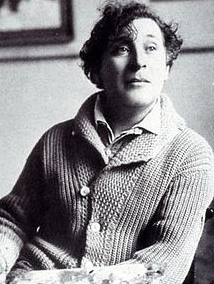
Marc Zaharovich Chagall (1887 –1985) was a Russian artist associated with several major artistic styles, as well as one of the most successful artists of the 20th century. He was an early modernist who created works in virtually every artistic medium, including painting, book illustrations, stained glass, stage sets, ceramics, tapestries and fine art prints.
Art critic Robert Hughes referred to Chagall as, “the quintessential Jewish artist of the twentieth century.”
Using the medium of stained glass, Chagall produced windows for the cathedrals of Reims and Metz, the UN building in New York City and the Israeli Parliament (Knesset) building.
Before World Wa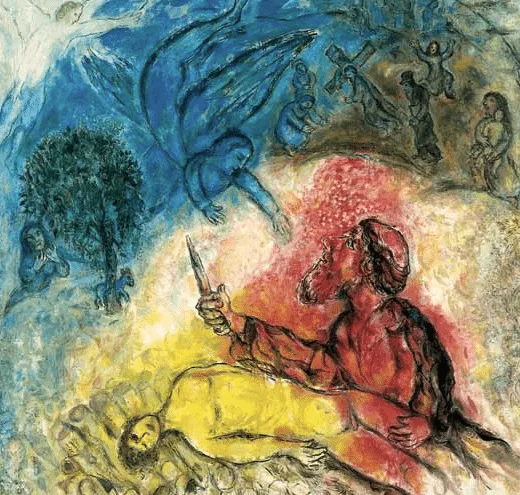 r I, Chagall traveled between St. Petersburg, Paris and Berlin. During this period he created his own mixture and style of modern art based on his understanding of Eastern European Jewish folk culture.
He spent the wartime years in Soviet Belarus, becoming one of the country’s most distinguished artists and a member of the modernist avante-garde, founding the Vitebsk Arts College before leaving again for Paris in 1922.
It is important that we view Chagall’s work in the context of Chagall’s life and circumstances. His hometown of Vitebsk had 60,000 inhabitants, almost split equally between Christians and Jews.
Coming from a Hasidic Jewish family that lived alongside religious Christians, Chagall struggled to r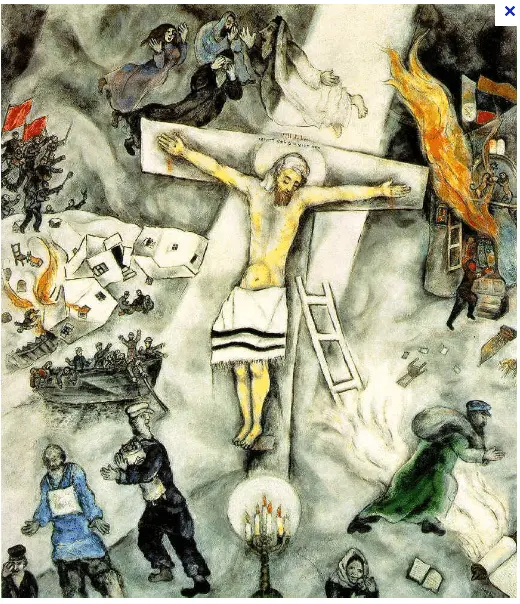 elate to Christian arguments about Jesus Christ and accusations made against the Jewish people. He visited Palestine under the British Mandate in early thirties, an event which was instrumental in inspiring his great passion for Biblical stories.
Crucifixion is considered a deeply painful symbol in the modern Jewish mind and it was probably so in Chagall’s day as well. His mixture of crucifixion alongside intimate Jewish symbols is viewed by some as disturbing. Chagall, however, saw the crucifixion of Jesus as a symbol of Jewish suffering, inflicted unjustly by gentiles upon Jews.
Jesus’ crucifixion is a common theme in Chagall’s work, but it is always the Jewish Jesus in the context of Jewish people. This is by no means an evangelistic attempt towards fellow Jews, it is rather Chagall’s defense of the Jews against the anti-semitism of many Christians in his local.
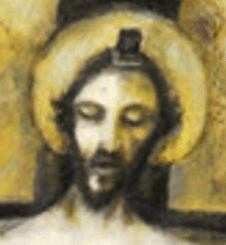 It is also important to note that Marc Chagall was way ahead of “Third Quest for Historical Jesus” (scholarly movement) conducted later by New Testmament scholars that focused on the discovery of Jesus’ Jewishness.
In a great number of his works, Chagall combined elements of an often paradoxical and richly imaginative world with identifiable local and autobiographical elements. His compositions may simultaneously contain allusions to the Bible and to Jewish history, as well as references to contemporary reality.
For further discussion, see Aaron Rosen’s (a research fellow at Yale University Divinity School) work on White Crucifixion.
(Source www.abcgallary.com)
To receive more information about learning Biblical Languages with Hebrew University of Jerusalem/eTeacher Biblical program online at affordable cost, please, click here.
© By Eli Lizorkin-Eyzenberg, Ph.D.
To sign up for weekly posts by Dr. Eli, please, click here. It is recommend by Dr. Eli that you read everything from the begining in his study of John. You can do so by clicking here – “Samaritan-Jewish Commentary”.