


Learning Biblical Hebrew is a wonderful way to deepen your connection to Scripture. Reading the Bible in its original language can reveal shades of meaning that don’t always come through in translation, helping familiar passages feel new again.
If you’ve started looking for a Biblical Hebrew course, you’ve probably noticed there are plenty of options to choose from. Some are university-backed, some are self-paced, and others promise fast results. With so many choices, it can be hard to know which programs are truly worth your time.
The good news is that finding the right course doesn’t have to be complicated. In this post, we’ll explore what makes a Biblical Hebrew program stand out, compare some of the most respected options available, and help you take your first step toward experiencing Scripture in a deeper way.
TLDR:
Not all Biblical Hebrew courses provide the same experience. The strongest programs combine expert instruction, structured learning, and opportunities to engage directly with the biblical text instead of simply memorizing vocabulary or grammar rules.
Among the most respected options are:
· Israel Institute of Biblical Studies
Each offers a different approach, ranging from university-affiliated programs to immersive language instruction.
Before enrolling, focus on the quality of instruction, learning format, and overall student experience. The right course should help you grow in confidence while deepening your understanding of Scripture and the world in which it was written.
What Makes A Great Biblical Hebrew Journey?
The best Biblical Hebrew courses do more than teach a language; they bring Scripture closer.
Many people begin studying Hebrew because they’re curious about a verse, a biblical character, or a question they’ve carried for years. What keeps them learning is the realization that even familiar passages can reveal something new when read in the original language.
Take the word אוֹר (or), usually translated as “light.” In Genesis 1, the word certainly refers to physical light. Yet throughout the Bible, light also becomes a picture of God’s guidance, wisdom, and presence. Seeing those connections in the original language can make familiar passages feel richer and more vivid.
And the word שָׁמַע (shama). It’s often translated as “hear,” but in the Bible it means much more than simply listening. It carries the idea of hearing, understanding, and responding. Suddenly, passages you’ve read many times take on new depth.
The right program bridges the gap between ancient words and modern ones. It starts with the foundations and gradually leads students into the biblical text itself, helping them build confidence one step at a time.

As you compare courses, look for a program that offers:
· Guidance from experienced teachers and scholars
· A clear path from beginner lessons to reading biblical passages
· Opportunities to ask questions and learn alongside others
· A supportive learning environment that encourages steady progress
· A connection to the historical and cultural world of the Bible
More importantly, choose a course that leaves you excited to open your Bible. The goal isn’t simply to learn Hebrew. It’s to see Scripture with fresh eyes and discover meanings that may have been there all along.
Top Biblical Hebrew Courses To Consider
There are many ways to learn Biblical Hebrew today, but a handful of programs consistently stand out for their quality, instruction, and student support.
1) The Israel Institute of Biblical Studies (IIBS)
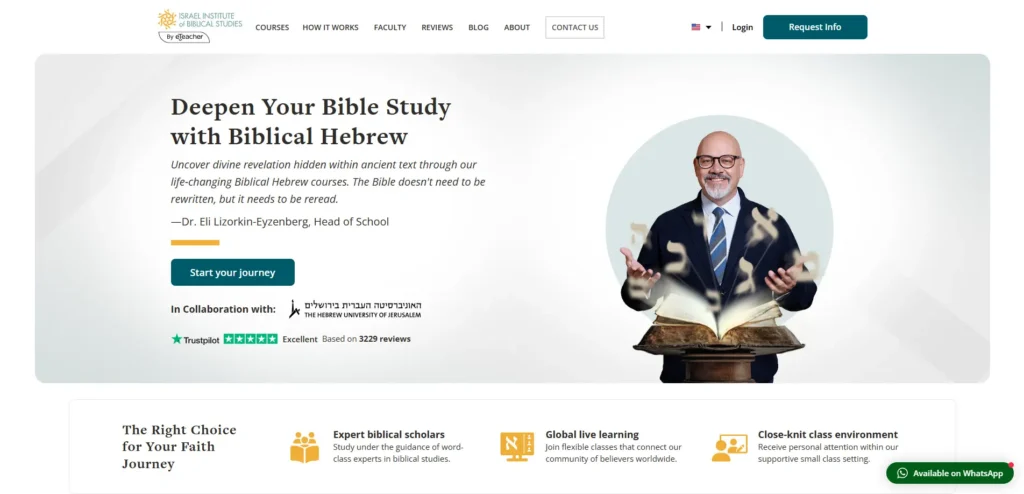
The Israel Institute of Biblical Studies (IIBS), in partnership with the Hebrew University of Jerusalem, offers a learning experience designed specifically for people who want to engage more deeply with the Bible.
Courses are taught live by Israeli scholars and educators who connect language study with the history, culture, and geography of the biblical world. Instead of treating Hebrew as an isolated academic subject, the program helps students see how the language fits into the broader story of Scripture.
Many students appreciate the supportive atmosphere and the opportunity to learn directly from teachers living in Israel.
Here are the available courses:
· Biblical Hebrew A: Learn the alphabet and begin reading the Hebrew Bible in its original language.
· Biblical Hebrew B: Dive deeper into the text to uncover the meaning behind the words and stories.
· Biblical Hebrew C: Work directly with ancient texts and build your own translation skills.
· Biblical Hebrew D: Explore the rhythm and beauty of biblical poetry, prophecies, and wisdom literature.
· Biblical Hebrew E: Trace how the language grew and changed across different historical periods.
· Scholars’ Hebrew Lab: Discovery (Advanced level): Unpack Abraham’s covenant, Balaam’s prophecies, and Gideon’s journey in the original Hebrew.
· Scholars’ Hebrew Lab: Exploration (Expert level): Tackle complex passages in Leviticus, prophetic narratives in Chronicles, and the poetry of the Psalms.
Accreditation: Fully accredited by the Hebrew University of Jerusalem.
2) Jewish Theological Seminary (JTS)

The Jewish Theological Seminary (JTS) appeals to learners who enjoy a more traditional academic setting and want a structured path through Biblical Hebrew. Its certificate program covers reading, interpretation, and language fundamentals through live online instruction led by experienced scholars.
Students that are looking for a seminary-style approach often find JTS to be a strong option.
Here are the available courses:
· Biblical Hebrew I: Jumpstart Your Biblical Hebrew: Fundamentals, nouns, and verbs.
· Biblical Hebrew II: Biblical Hebrew Workshop: Intermediate verb forms.
· Biblical Hebrew III: Binyanim Boot Camp: Advanced verb stems and reading.
· Biblical Hebrew IV: Advanced Reading Seminar: Full biblical book study.
Accreditation: JTS is an accredited academic institution offering recognized certificates.
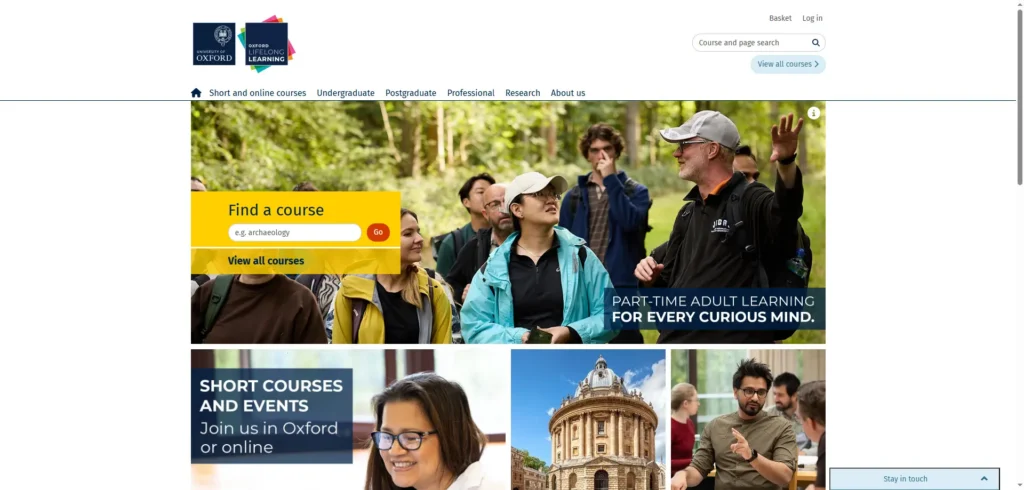
Oxford’s continuing education courses offer an accessible introduction to Biblical Hebrew for adult learners. The courses combine independent study with live instruction, allowing students to learn at a steady pace while benefiting from university-level teaching.
For learners who value flexibility and institutional prestige, Oxford provides an attractive starting point.
These are the courses offered:
· Beginners: Part 1 – Fundamentals of Biblical Hebrew.
· Beginners: Part 2 – Continuation of foundational skills.
· Beginners: Consolidation – Reinforcement and deeper practice of beginner material.
Accreditation: Courses are offered through the University of Oxford and may count toward recognized qualifications.
4) Polis: The Jerusalem Institute of Languages and Humanities
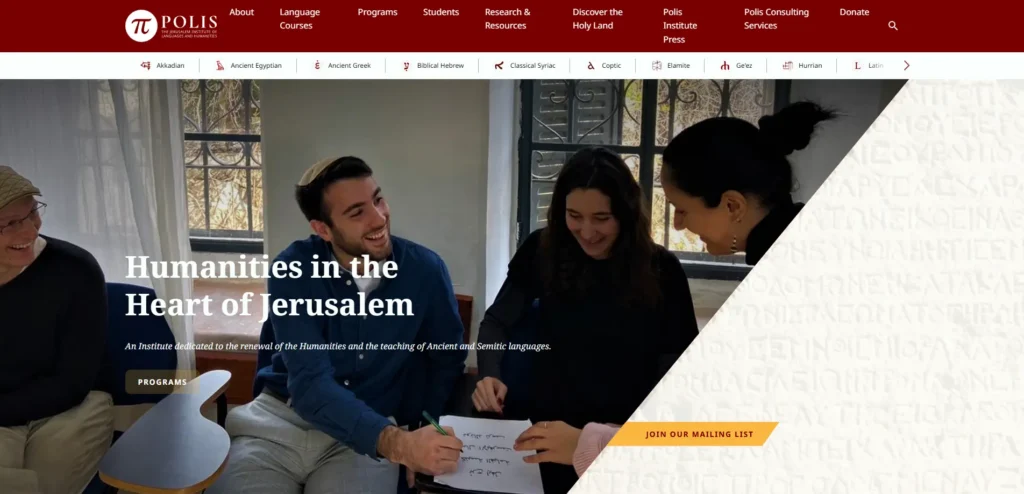
Polis approaches Biblical Hebrew differently. Instead of treating it mainly as a subject to analyze, students are encouraged to use the language actively from the beginning through immersion-based learning.
Many learners enjoy this hands-on approach because it creates a more direct relationship with the language and the texts they are studying.
The courses offered are:
· Biblical Hebrew I to VI: progressive language mastery
· Oral Proficiency I to IV: spoken fluency development
Accreditation: Polis operates as an independent academic institute; courses don’t carry external university accreditation.
Biblical Hebrew Courses Comparison
| Course Provider | Accreditation | Format | Levels | Standout Feature |
|---|---|---|---|---|
| Israel Institute of Biblical Studies (IIBS) | Hebrew University of Jerusalem | Live Online | Beginner to Advanced | Biblical learning combined with Israeli cultural context |
| Jewish Theological Seminary (JTS) | Accredited academic institution | Live Online | Beginner to Advanced | Seminary-style academic study |
| University of Oxford | University-backed | Live + Flexible | Beginner | Prestigious continuing education program |
| Polis Institute | Independent Institute | Live Immersive | Beginner to Advanced | Total immersion learning method |
Why Accreditation Matters
Think of accreditation as a trusted stamp of approval. It simply means an outside team of educators has looked at the program and said, “Yes, this is the real deal.” If you are looking to earn credits that transfer or want to pursue formal academic degrees down the road, it’s a fantastic thing to look for.
But remember, accreditation is only one piece of the puzzle. The most transformative learning experiences happen when excellent scholarship meets a genuine passion for the text. A course can absolutely hold itself to the highest academic standards while still being deeply inspiring, creative, and joyful to experience every week.
Finding Your Perfect Fit
Choosing a program is about finding a place where you can truly thrive. As you look at your options, ask yourself these three simple questions:
1. Do I want a classroom or a community? Look for a program that brings people together. You want live, real-time connections with teachers and classmates, not just a lonely screen filled with pre-recorded videos.
2. Does the tone inspire me? Avoid rigid, textbook-heavy courses that force you to memorize endless grammar charts without ever showing you the beautiful spiritual payoff hidden inside the verses.
3. Who is guiding my journey? Make sure you are learning from scholars who don’t just know the rules of grammar, but who truly understand and love the history, culture, and heart behind the ancient text.
Where To Find Biblical Hebrew Courses Online
You can study Biblical Hebrew through universities, seminaries, or specialized online institutes. While apps are helpful supplements, live instruction provides the real-time support needed to read directly from the Hebrew Bible.
This approach connects you directly to history. For example, when you read וַיֹּאמֶר יְהוָה אֶל־אַבְרָם (“And the Lord said to Abram”), you’re no longer relying on a translation but reading the original words yourself, an experience that changes how you see Scripture.
Start Learning Biblical Hebrew Today
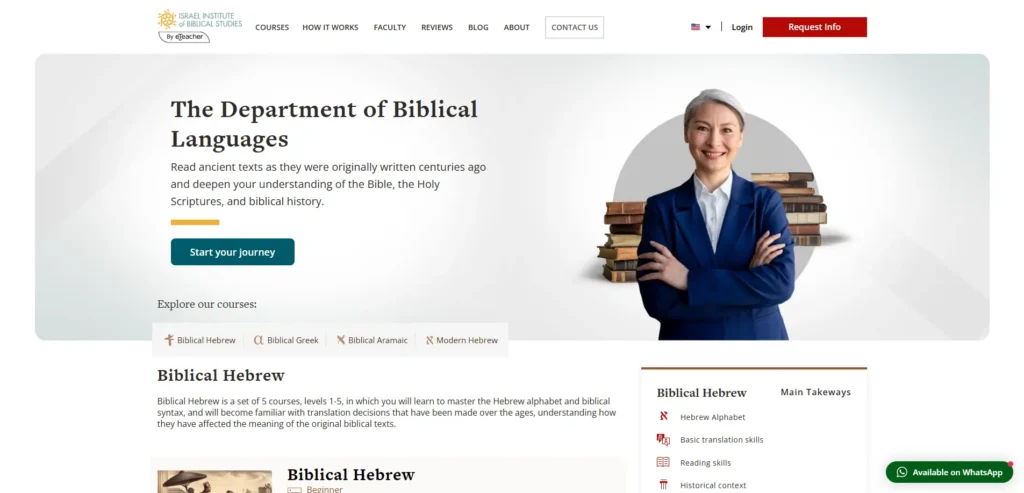
Explore our online Biblical Hebrew courses and discover meanings hidden within the original text. Our caring teachers will guide you step by step as you deepen your connection to Scripture.
Conclusion
Finding the right Biblical Hebrew course isn’t about choosing a curriculum. It’s about finding a learning experience that helps you engage more deeply with God’s Word and grow in confidence as you study.
Throughout the journey, you’ll encounter moments that bring familiar passages to life. Understanding that broader meaning adds depth to countless passages throughout Scripture and reminds us how much richness can be found in the original language.
Whether you choose the Israel Institute of Biblical Studies, Jewish Theological Seminary, University of Oxford, or Polis Institute, the goal is the same: to experience Scripture in a deeper and more meaningful way.
The Bible doesn’t need to be rewritten. It needs to be re-read.
FAQ:
What’s the best way to learn Biblical Hebrew online?
Most learners benefit from a structured program that combines live instruction, guided practice, and direct engagement with Scripture. Learning alongside experienced teachers can make the process more enjoyable and rewarding.
Do I need Modern Hebrew first?
No. Most beginner courses assume no prior knowledge and start with the foundations needed to read Biblical Hebrew.
How long does it take?
That depends on your goals and study schedule. Many students begin reading simple biblical passages within months, while advanced proficiency can take several years of consistent study.
Does accreditation matter?
Accreditation can provide confidence in the quality of a program and may help with academic recognition. However, instructor quality and learning experience are equally important.
Can I earn college credit?
Some programs offer transferable academic credits or recognized certificates. Always verify current policies with the institution before enrolling.
What makes a good instructor?
Look for teachers who combine scholarly expertise with a passion for helping students engage more deeply with Scripture. Great instructors make learning both accessible and meaningful.
How is Biblical Hebrew different from Modern Hebrew?
Biblical Hebrew is the language of the Hebrew Bible, while Modern Hebrew is the language spoken in Israel today. They share many connections, creating a fascinating bridge between the world of the Bible and the modern revival of Hebrew.