

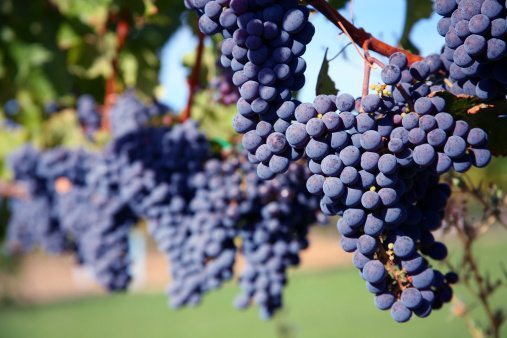
 “I am the true vine, and my Father is the vinedresser. 2 Every branch in me that does not bear fruit he takes away, and every branch that does bear fruit he prunes, that it may bear more fruit. 3 Already you are clean because of the word that I have spoken to you.
For better viewing click HERE.
Jesus’ allegorical reference to himself as the true vine is no coincidence. We have already seen that the Gospel of John continuously echoes several prophetic voices of the Hebrew Bible, notably Isaiah, Zechariah and Ezekiel. The book of Isaiah contains significant content regarding the concept of the vineyard. In short, according to this Isaiah reference, Israel is God’s vineyard and its wellbeing depends upon its bearing or not bearing fruit.
We read in Isaiah 5:1-30 “Now I will sing for my friend a song about his vineyard. My friend had a vineyard on a hill with very rich soil. 2 He dug and cleared the field of stones and planted the best grapevines there… He hoped good grapes would grow there, but only bad ones grew… 5 Now I will tell you what I will do to my vineyard: I will remove the hedge, and it will be burned. I will break down the stone wall, and it will be walked on. 6 I will ruin my field… 7 The vineyard belonging to the Lord All-Powerful is the nation of Israel; the garden that he loves is the people of Judah. He looked for justice, but there was only killing. He hoped for right living, but there were only cries of pain… 16 The Lord All-Powerful will receive glory by judging fairly; the holy God will show himself holy by doing what is right. … They have refused to obey the teachings of the Lord All-Powerful and have hated the message from the Holy God of Israel.
Remember in the previous section we saw that Jesus, in his Israel-renewing agenda, appointed the twelve apostles to be the new/renewed heads of Israel. Therefore his instructions to them about remaining in him are crucially important to their remaining as the renewed/new leaders/shepherds of Israel.
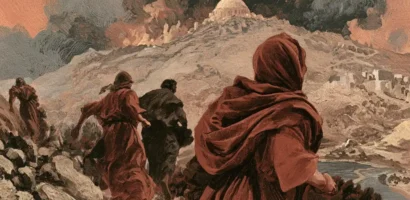
4 Abide in me, and I in you. As the branch cannot bear fruit by itself, unless it abides in the vine, neither can you, unless you abide in me. 5 I am the vine; you are the branches. Whoever abides in me and I in him, he it is that bears much fruit, for apart from me you can do nothing. 6 If anyone does not abide in me he is thrown away like a branch and withers; and the branches are gathered, thrown into the fire, and burned. 7 If you abide in me, and my words abide in you, ask whatever you wish, and it will be done for you. 8 By this my Father is glorified, that you bear much fruit and so prove to be my disciples.
Jesus calls himself the true vine, and as usual in John he does not directly quote from the Hebrew scriptures as do synoptics. He usually only alludes to a powerful old testament references. It is possible (though not at all certain) that John’s Jesus not only refers to Isaiah 5, but also to Gen. 49:22 where we read that “Joseph is a fruitful vine, even a fruitful vine by a well; whose branches run over the wall.”
This and the remainder of the passages speak of mighty blessings placed upon Joseph.
It is clear that Joseph is in some ways a type of Christ. We see this in his betrayal, suffering, his departure from his father, and his return from the dead (though obviously in Joseph’s case only symbolically). You may recall that Christ and the Samaritan woman converse in Samaria at the site of the burial of Joseph’s bones. Joseph was pictured in Gen. 49:22 as the unstoppable vine that overcomes obstacles and is full of life that’s irreversibly blessed by God. Its branches will even climb over a wall.
So it is likely that John’s Jesus is shown here as the ultimate Joseph who is the blessed vine. This is the vine to which all members of Israel, especially its leaders, must be connected so that they may be blessed, survive, and bear fruit.
If this is the case, then my hypothesis that John may have been written to particularly reach Samaritan Israelites (though obviously not only) with the Gospel of Christ is strengthened by this connection to Joseph. You may recall that for the Israelite Samaritans Joseph was one of the great figures of their history and identity. Therefore this connection would be logical, especially to those Israelites who identified with Joseph far more than did other Israelites at this time.
9 As the Father has loved me, so have I loved you. Abide in my love. 10 If you keep my commandments, you will abide in my love, just as I have kept my Father’s commandments and abide in his love. 11 These things I have spoken to you, that my joy may be in you, and that your joy may be full.
If I am correct in my hypothesis of a connection with Joseph (incidentally thanks go to my mentor David Loden for pointing this out to me), it is clear that Joseph’s blessing itself originated with God. From there, through Joseph – the blessed vine –blessing can flow to all branches of the vine and they will bear much fruit; first because of their connection to the vine, but ultimately because of God’s blessings upon the vine itself (Joseph/Jesus).