


Learning Biblical Hebrew often feels out of reach for busy beginners. An unfamiliar alphabet, an ancient language, and stories about complex grammar can make the journey seem intimidating before it even begins.
Reality is much more encouraging. Working professionals, parents, and other busy learners discover that Biblical Hebrew becomes approachable when they follow a clear path and take one step at a time. Growing confidence with the language helps familiar passages feel fresh again.
TLDR:
Biblical Hebrew presents a few early challenges, including a new alphabet and reading from right to left. Consistent practice and clear guidance make those first hurdles easier to overcome than many beginners expect.
A relatively small core vocabulary and the Hebrew root system help learners build confidence as they recognize familiar word patterns throughout Scripture. Many students begin reading simple biblical words within the first few months and continue making steady progress through regular, manageable study.
The Elephant In The Room: Is Biblical Hebrew Difficult?
Many people assume Biblical Hebrew is one of the hardest languages to learn. Ancient languages can seem intimidating, leading some to believe they require the knowledge of linguists or biblical scholars to understand.
Learning Biblical Hebrew certainly requires patience, just as learning any new language does. Progress comes through regular practice instead of overnight success. Good instruction breaks each lesson into manageable steps, allowing new skills to build naturally over time.

Best of all, becoming a linguist is not a requirement for reading the Hebrew Bible. Many learners begin recognizing words, understanding simple phrases, and appreciating details hidden behind English translations much sooner than they imagined.
The Initial Hurdles
Almost every beginner encounters the same first obstacles. Hebrew uses a different alphabet, includes its own vowel markings, and is read from right to left. At first glance, the page can feel completely unfamiliar.
But many students are surprised by how quickly those early challenges begin to fade. Each new letter adds another piece to the puzzle until unfamiliar symbols become recognizable characters.
Learning just a handful of letters can create exciting moments of discovery. Letters such as Lamed (ל), Mem (מ, ם), Nun (נ, ן), Resh (ר), Heh (ה), and Het (ח) appear throughout the Hebrew Bible.
One memorable example is Lev (לֵב), the Hebrew word for “heart.” Hebrew uses Lev to describe far more than emotions. It often refers to the center of a person’s thoughts, choices, understanding, and inner life.
Recognizing לֵב on the page for the first time reminds many learners that the original text is no longer a collection of mysterious symbols. Scripture begins to feel readable in ways that once seemed impossible.
Why Biblical Hebrew Is Actually Easier Than You Think
Vocabulary often worries beginners more than anything else. Memorizing thousands of unrelated words sounds overwhelming. But Biblical Hebrew follows a very different pattern.
Many words grow from a shared three-letter root called a shoresh (שֹׁרֶשׁ), the Hebrew word for “root.” Instead of learning isolated vocabulary, students begin recognizing families of related words built from the same foundation.
Consider the root M-L-K (מ־ל־ך). Learning it unlocks connected words such as melekh (מלך), meaning “king,” and malkhut (מַלְכוּת), meaning “kingdom.” One root opens the door to a broader biblical vocabulary.
Another encouraging advantage is the size of Biblical Hebrew itself. Unlike modern languages that continually add new terminology, Biblical Hebrew has a relatively small core vocabulary. Familiar words appear throughout Scripture, allowing recognition to grow naturally with continued reading.
Words such as Elohim (אֱלֹהִים), meaning “God,” and Eretz (אֶרֶץ), meaning “land” or “earth,” appear again and again. Every encounter reinforces what learners already know instead of introducing completely new vocabulary.
Time Estimates By goal
One of the biggest questions beginners ask is, “How long will it take before I can actually read Biblical Hebrew?”
Every learner progresses at a different pace, but consistent study produces realistic milestones. Small improvements add up surprisingly quickly, especially when lessons build on one another.
The following milestones offer a general guide to what many beginners may achieve through regular practice.
Months 1-3: Cracking The Code
Beginners master the alphabet, vowel systems, and foundational construct chains. Learning focuses on recognizing predictable 3-letter roots instead of memorizing isolated terms. Early text practice centers on passages such as Genesis 1 and 11.
Months 4-6: Connecting The Pieces
Students build complete sentences and learn past-tense forms such as Qatal verbs while becoming familiar with Biblical Hebrew sentence structure, including how present-tense sentences often omit an explicit word for “to be.” They then apply those skills by reading passages from books such as Genesis and Ruth.
Months 7-8: Unlocking The Text
Learners complete the core verb system by integrating future-oriented Yiqtol patterns with narrative forms such as Wayyiqtol. They see how forms like wayyomer (וַיֹּאמֶר, “and he said”) propel the action in Biblical narratives. Reading then expands into continuous passages from Ruth 2–3 and selected Psalms.
| Timeline | Core Focus | Key Skill Unlocked | Biblical Text Practice |
| Months 1-3 | Script, vowels, and 3-letter roots | Deciphering letter patterns and word families | Creation and early verses (Genesis 1, 11) |
| Months 4-6 | Sentence structures and past verbs (Qatal) | Reading direct, efficient Hebrew expressions | Narrative foundations (Genesis 28, Ruth 1) |
| Months 7-8 | Action sequences (Wayyiqtol storytelling) | Reading continuous prose without standard translation crutches | Narrative prose and poetry (Ruth 2–3, Psalms) |
Can Anyone Learn Biblical Hebrew? Overcoming Common Beginner Myths
One of the biggest misconceptions about learning Biblical Hebrew is that you need hours of free time every day. Many people assume meaningful progress only comes through long study sessions or an academic schedule.
In reality, consistency matters more than the number of hours you study. Even 20 to 30 minutes of focused study on most days of the week can help beginners build reading skills step by step. Small improvements accumulate over time, making steady progress realistic even with a busy schedule.
Instead of feeling like another obligation, regular study can become part of your devotional life. The Hebrew word Avodah (עֲבוֹדָה) means both “work” and “worship” in different contexts, reflecting the biblical idea that everyday work can be an expression of devotion to God. Learning Biblical Hebrew can be approached with that same mindset, turning each lesson into an opportunity to engage more deeply with Scripture.
Every lesson brings you closer to reading the Bible in its original language while deepening your appreciation for its literary beauty, vocabulary, and historical context.
Why Structure Beats Motivation
Motivation is a wonderful place to begin, but it rarely carries someone through an entire language-learning journey.
Many beginners jump between books, videos, and websites, only to discover that scattered resources create gaps in their knowledge. A structured learning path introduces each skill in a logical order, helping learners build reading, vocabulary, and grammar together while tracking their progress with confidence.
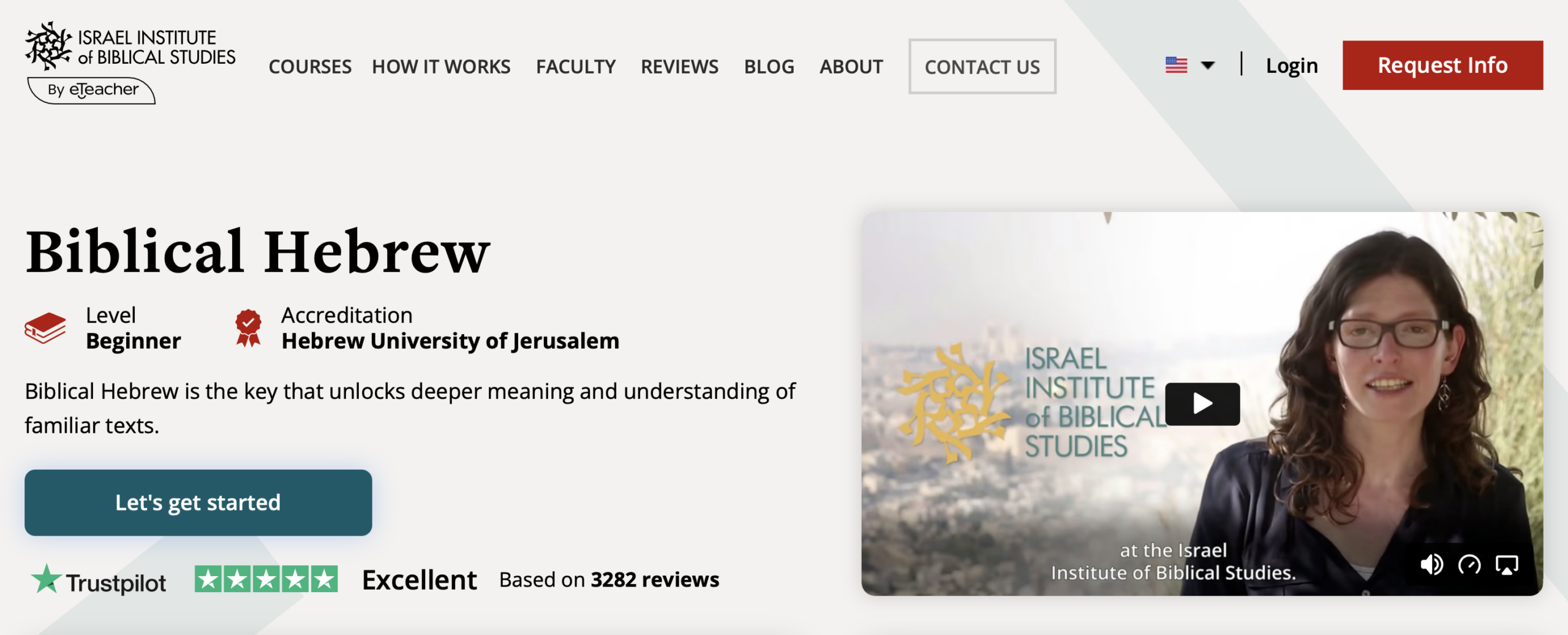
The Biblical Hebrew A course at the Israel Institute of Biblical Studies provides that guided approach through live, small-group classes led by experienced teachers and scholars. Students learn to:
- Master the Hebrew alphabet and vowel system.
- Read and pronounce common biblical words with confidence.
- Recognize the three-letter root system (shoresh) that shapes Biblical Hebrew vocabulary.
- Begin reading simple verses from the Hebrew Bible while understanding their meaning.
Learning alongside a supportive community also makes a difference. Questions receive thoughtful answers, encouragement comes naturally, and steady progress feels achievable as learners deepen their understanding of Scripture together.
Begin Your Journey Into The Ancient Text
Structure beats motivation. Follow a guided learning path that helps you stay consistent and begin reading the Hebrew Bible with confidence.
Conclusion
Biblical Hebrew may seem intimidating at first, but it becomes far more approachable when you take it one step at a time. A new alphabet, recurring word patterns, and steady practice gradually open the door to reading Scripture in its original language with growing confidence.
Every lesson brings you closer to the world of the Bible. Familiar passages reveal richer meaning, literary beauty becomes more visible, and the original Hebrew offers fresh insight that translations can’t always capture.
A guided learning path can help you stay consistent, deepen your understanding of God’s Word, and experience the Bible in a more personal and meaningful way.
FAQ:
Is Biblical Hebrew hard for complete beginners to learn?
Beginners often find the alphabet and right-to-left layout unfamiliar at first, but these features become recognizable within a few weeks of practice. Concise daily lessons help adult learners make steady progress without feeling overwhelmed.
How long does it take to start reading Biblical Hebrew?
Many beginners begin recognizing letters, reading simple words, and understanding basic passages within the first few months of consistent study. Progress depends on regular practice and clear instruction.
How many hours a day do I need to study Biblical Hebrew?
Short study sessions lasting twenty to thirty minutes daily yield far better results than long, exhausting study marathons. Regular practice reinforces vocabulary, sentence patterns, and reading fluency effectively.