

We continue our journey through the book of Genesis. Over the next few weeks, we will turn to the often-overlooked chapters of Genesis 4 and 5. While almost everyone knows Genesis 1–3 and the story of the Flood (beginning in Genesis 6), these chapters are rarely discussed — and yet they contain crucial details that become especially clear in the original Hebrew.
Cain: Acquired, Not Given
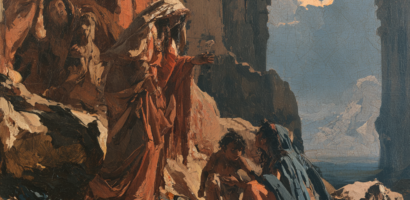
We have all seen paintings of Adam and Eve leaving the Garden — sobbing, wringing their hands, crushed by sorrow. Years ago, one very simple thought struck me and never left me: with all their tears, they were entering the very same world in which you and I now live. Their sorrow is our sorrow — the difference is that they knew exactly what they had lost.
From the moment of their banishment from Gan Eden, their first words and actions carry immense weight. We read: “Now Adam knew Eve his wife, and she conceived and bore Cain, and said, ‘I have acquired a man from the LORD.’” In these words, we hear Eve’s deep longing for restoration and return. Many understand God’s words in Genesis 3 as a promise of a coming deliverer, and Eve seems to hope that her first son might be that one.
The Hebrew name Cain (קַיִן, kayin) comes from a root meaning “to acquire.” It reflects Eve’s belief that she herself had acquired a solution — that through her own action, the broken situation might be repaired. Probably waiting for the fulfilment of the promise of Genesis 3 (and perhaps also feeling guilt and a need to make amends), she felt she had to do something — that it was her task and responsibility to remedy the situation. That is why she called her son Cain: she believed she had “acquired” him from the LORD to fix what was broken.
But as we all know, Cain was not the saviour… And very soon, we encounter a scene we think we know well — and yet, in Hebrew, it contains a mystery that translations usually pass over.
What Did Cain Say?
In Genesis 4, we meet Eve’s two sons, each bringing an offering to the LORD:
Cain brings “from the fruit of the soil,” while Abel brings “from the firstlings of his flock.” Only Abel’s sacrifice is accepted — likely marked by some visible sign.
The biblical text does not explain God’s choice. Many commentators, therefore, look for the reason in the brothers’ intentions: Cain brings an offering, while Abel brings the choicest of what he has. However, some commentators note that God’s rejection of Cain’s offering is ultimately inexplicable to human logic. Apparently, Cain felt this way as well: he reacted angrily and violently to a rejection he could not comprehend.
And here, Hebrew reveals something unexpected.
In English, we read: “And Cain talked with Abel his brother.” Nothing seems missing.
But the Hebrew text says:
וַיֹּאמֶר קַיִן אֶל־הֶבֶל אָחִיו
Literally: “And Cain said to Abel his brother…”
And then — silence.
Cain says something, but the Bible never tells us what it was.
What did Cain say?
Some Jewish sages suggest that Cain said words like: “There is no justice, no Judge, and no world to come.” Of course, this is just an interpretation — an attempt to fill the gap. But while Scripture leaves Cain’s words to Abel unspoken, it preserves his words to God with chilling clarity.
After murdering his brother, Cain confronts God with a defiant question that has echoed through history:
“Am I my brother’s keeper?”
According to Jewish commentary, Cain’s words carry an accusation:
“Am I my brother’s keeper? You are God. It is Your task to watch him, not mine. If what I did was wrong, You could have stopped me.”
Here, Cain defies God Himself. Adam sinned. Cain commits both sin and crime. Thus, in Genesis 4, the long biblical chronicle of post-Eden human rebellion begins.
And so, Chapter 4 is marked by tragedy and loss — but also by renewed hope. After the death of Abel, Scripture introduces us to another son born to Eve, and his name carries a message that is easy to miss in translation, but unmistakable in Hebrew.
Seth: Provided, Not Acquired
We all know that in Genesis 4, Cain, the firstborn of Adam and Eve, kills his brother Abel. By the end of the chapter, another son is born to Eve, and she names him Seth, saying:
“For God has appointed for me another seed instead of Abel.”
We just spoke about the name Cain and how it reflected Eve’s own action and her worldview. His name comes from a root meaning “to acquire.” We know that Eve probably felt she had to do something — that it was her responsibility to remedy the broken situation, perhaps while waiting for the fulfillment of the promise of Genesis 3, and perhaps also trying to make up for her mistake.
The name Seth, however, expresses an entirely different worldview.
In Hebrew, שֵׁת (shet) is related to the verb lashit (לָשִית), meaning “to appoint” or “to provide.” Notice the shift: this time, the name points not to Eve’s action, but to God’s. Eve no longer speaks of what she has acquired, but of what God has given.
This difference is subtle in translation, but striking in Hebrew — and deeply significant. By this point, Eve seems to understand something crucial: it is not human effort that can heal what was broken. Only God can provide what is truly needed.
The contrast between the names Cain and Seth tells a powerful story — a movement from self-reliance to trust, from human striving to divine provision. It is a lesson that remains profoundly relevant for us today — a lesson that gave hope then and gives us hope now.
Hope in the Gloom
As we saw earlier, Abel lived a wandering life, unwilling to put down roots in a fallen world. Cain, however, chose a settled life, embracing the world as it was. This contrast becomes clear in God’s judgment on Cain:
“When you till the ground, it shall no longer yield its strength to you. You shall be a fugitive and a wanderer on the earth.”
Cain is denied the right to settle.
Yet what happens next? Cain goes to the land of Nod — the land of wandering — and builds a city. He resists God’s sentence, attempting to reclaim a settled, comfortable existence. As we follow the line of Cain’s descendants, this attitude intensifies, reaching its full expression in Lamech, the fifth generation from Cain.
Within just a few generations — indeed, within the lifetime of the first man — nearly every commandment of God is broken. Lamech introduces polygamy: “Lamech took two wives.” Scripture then preserves his boastful poem, often called “Lamech’s Sword Song,” filled with arrogance, violence, and trust in human strength rather than in God. By this point, the civilization of Cain appears fully formed — and utterly godless. Is there any hope in this growing darkness?
But we have just spoken of the hope found in the final verses of this chapter: “Adam knew his wife again, and she bore a son and named him Seth.”
God gives Adam and Eve another son, and we remember that by now, Eve’s perspective has changed. She knows that this child is not acquired by human effort, but appointed by God.
When we turn to the line of Seth, the contrast is striking. Even the name of his son speaks volumes: Enosh (אֱנוֹשׁ) — human, frail. It stands as a quiet confession of human weakness and reliance on God, in contrast to the defiant confidence of the Cainites.
And the chapter ends with a sentence that changes everything:
“Then people began to call on the name of the LORD.”
In the midst of violence and rebellion, a different line emerges — marked not by human strength, but by dependence on God. This is where hope enters the story.
If you like the insights on this blog, you might enjoy my books, you can find them here: books. As always, I would be happy to provide more information (also, a teacher’s discount for new students) regarding our wonderful courses (juliab@eteachergroup.com)