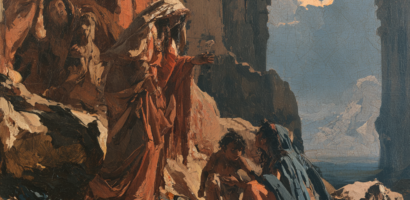


This week — as we entered Chodesh Adar, the joyous month of Purim — Israel found itself at the beginning of a new and sobering chapter in its history. On Shabbat Zachor, the “Sabbath of Remembrance,” we read:
“Remember what Amalek did to you on the way when you went out of Egypt…” (Deuteronomy 25:17–19)
This command is more than historical memory. It is a spiritual charge — to discern patterns of enmity that recur across generations.
This year, it feels especially relevant: precisely on Shabbat Zachor, Israel and the United States launched a coordinated military operation against the Islamic Republic of Iran, striking military and leadership targets deep inside Iran. The strikes reportedly hit targets in Tehran and other Iranian cities and followed negotiations that had failed to resolve those threats. By the time this post is published, the conflict has already widened: Iran has launched missiles at Israel and other countries; Hezbollah has fired rockets against Israel from Lebanon; and Israel has responded with military strikes against Hezbollah targets. Civilian casualties, regional instability, and global economic disruption are mounting as the conflict shifts from isolated tensions into full-blown war.
Amidst these unfolding events, the ancient words of Shabbat Zachor echo with new urgency.
The Hidden Beginning: Amalek, Saul, and the Roots of Purim
On Shabbat Zachor, we do not read only about the wilderness attack by Amalek. We also read from 1 Samuel 15, where King Saul is commanded to strike Amalek utterly.
Despite God’s explicit instruction, Saul spares Agag, king of the Amalekites, and “the best of the sheep and oxen… and all that was good.” His partial obedience leads Samuel to say:
“I greatly regret that I have set up Saul as king… for he has not performed My commandments.”
Saul loses his kingship as a result.
Note next the genealogies:
- Saul is the son of Kish, of the tribe of Benjamin (1 Samuel 9:1–2).
- Centuries later, in the Book of Esther, Haman is described as an Agagite, a descendant of Amalek’s king Agag — and Mordecai as the son of Kish, a Benjamite.
In other words, the unresolved conflict between Saul and the Amalekites is not accidental. It reappears centuries later in the Persian empire, as a new crisis for God’s people — one that must be resolved.
Saul failed to destroy Agag completely. The Amalekic line persisted. And now, in the Book of Esther, a descendant of Kish must oppose a descendant of Agag — not by brute force alone, but through courage, wisdom, and faith.
Purim: When God Works Behind the Scenes
That deep link between Amalek and Purim reveals something essential about how God works in history. The Book of Esther famously never mentions the name of God. Yet Shabbat Zachor teaches us that God is there — precisely in the hidden movements that lead to salvation.
Purim was not an isolated political drama. It was the culmination of a long spiritual conflict that began with Amalek in the wilderness and continued through Israel’s monarchy. Mordecai’s courage springs from that memory, not as ancient legend but as a living spiritual lineage. And through Esther and Mordecai — God’s providence, hidden yet powerful, delivers Israel.
From Amalek to Modern Iran: Patterns that Echo Through History
This year, as Israel enters a new war that began precisely on Shabbat Zachor, we can reflect on this spiritual pattern.
Many commentators on current events have already drawn parallels between the type of hostile ideologies that vow destruction of the Jewish people and the ancient Amalekite-Haman spirit. Iranian leadership — for decades — has openly declared hostility toward Israel and the United States and has supported militant proxy groups such as Hezbollah, Hamas, and militias in Syria and Iraq.
Whether one describes these forces as ideological heirs of Amalek or as modern geopolitical threats, the pattern is clear: there are movements in the world that seek the destruction of God’s people, and those movements do not fade simply because time passes. They require discernment, confrontation, and — above all — spiritual clarity. The pattern of enmity — and the command to “remember” — invites us to see that wars are not merely political. They are often rooted in competing visions of life, identity, existential destiny, and memory.
When War Comes on the Shabbat of Remembering
This year, the war broke out between Israel and Iran exactly Shabbat Zachor. Synagogues read about Amalek while, in the skies above the Middle East, missiles were flying, reservists were mobilizing, and civilians were sheltering.
There is deep tragedy in war: loss of life, instability, fear, families separated, and futures put on hold. As people of faith, we must lament these losses and pray for peace.
But Shabbat Zachor — and the story of Purim — also remind us that God’s purposes are not derailed by human conflict. The spiritual truth encoded into Scripture is that adversity does not have the final word. Even when human leadership fails, God’s plan continues.
In the Amalek narrative, Saul fails. The task is left incomplete. In Persia, Mordecai — a descendant of the same House of Kish that failed — rises courageously where Saul did not. The unfinished conflict is resolved not through Saul’s sword, but through Esther’s faith and Mordecai’s boldness.
We could see in our time a symbolic echo: when human machinations fall short, God’s hidden providence works through unexpected channels to protect, deliver, and preserve life.
Purim and Adar: A Call to Remember
In the days ahead, as war unfolds, we have a unique spiritual moment:
Adar calls us to joy, but the current moment calls us to remembrance.
Shabbat Zachor asks: Who are our Amalekites?
Purim asks: How does God save in hidden ways?
In this current conflict, the answers will not come only from diplomatic negotiations, battlefield reports, or strategic victories. They will come from a deeper remembering of who God is, of whose we are, and of how history, in God’s sovereign hands, always moves toward redemption.
God did not abandon Israel in the wilderness.
He did not abandon Israel in Persia.
He will not abandon Israel now.
Even when God’s name is not spoken aloud — as in the Book of Esther — His providence is visible in the preservation of life.
Conclusion: Divine Memory and the War of Our Times
This Adar, we face headlines filled with war, not feasting. But Shabbat Zachor teaches us that remembering is not merely about looking back. It is about seeing forward — recognizing patterns of enmity, trusting in God’s ongoing plan, and participating in the spiritual perseverance that leads to redemption.
In every generation, there are Amalekites — forces that oppose God’s people and God’s purposes. In every generation, God calls His people to remember, discern, and remain faithful.
May this Adar be a season not just of history remembered — but of spiritual clarity renewed — in the midst of our struggles and in the hope that only God can give.
As we reflect on these ancient and modern struggles, we can pray:
May remembrance sharpen our spiritual vision.
God commanded Israel to remember Amalek — not out of vengeance, but to discern the spiritual currents that threaten life.
May we have such clarity today.
May we see God’s hidden ways.
Like Esther, may courage rise in places unseen, and may peaceful deliverance come through wisdom first, strength second.
May we pray for peace.
Though wars rage and conflicts escalate, we always pray for shalom — healing, resolution, and the restoration of life for all.
If you like the insights on this blog, you might enjoy my books, you can find them here: books. As always, I would be happy to provide more information (also, a teacher’s discount for new students) regarding our wonderful courses (juliab@eteachergroup.com)