


THE CROOKED SHALL BE STRAIGHT
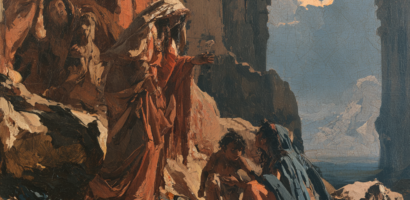
Twenty years have passed since Jacob deceived his brother Esau and had to flee from his wrath. For twenty years, he had stayed outside the Land. The time has come to go home. As Jacob prepares to meet Esau, he encounters God! A mysterious man (ish) wrestles with him through the night, and then the man who fought with Jacob blessed him, and in blessing him he changed his name to Israel—Jacob becomes Israel! Names in the ancient Jewish world carried a very important weight. A name spoke of a person’s character, his deeds and his identity. For a person to be given a new name, meant a change of their identity. So, what is the meaning of this name, Israel, and what is the meaning of this change?
“The man” said to Jacob: Your name shall no longer be Jacob, but Israel, for you have striven with beings divine and human, and have prevailed.” Therefore, it is widely believed that the word “Israel” comes from the Hebrew word שרית , which in biblical Hebrew means “to struggle”, “to exercise influence”, “to prevail”. There is an additional way to interpret this name, however, and this way may help us to comprehend the depth of the transformation at Penuel.
The name Israel might be read as Yashar- El(ישר-אל). Hebrew word Yashar (יָשָׁר) means straight, honest, honorable, law-abiding; in biblical usage, it also means a “righteous, God-fearing person”. The root עָקֹב ֙, on the other hand (the root of the name Yakov) might mean also “crooked”, like in this verse: the crooked (הֶֽעָקֹב֙ ) shall be made straight[1]. We then understand the meaning of this change: Jacob-Israel is the one whom God makes straight as opposed to “being crooked and uneven”.
THE LONG NIGHT OF EXILE
After this mysterious and unique encounter, we read: “The sun rose upon him as he passed Penuel, limping on his hip.”[2] Why does the Torah find it necessary to use this remark about the rising sun here?
From the text we know that the Penuel encounter happens during Jacob’s last night outside the Land. We might recall Jacob’s encounter with God during his last night in the Land – the famous “Jacob’s ladder” dream from our last Torah portion. It says: “And he came to a certain place and stayed there that night, because the sun had set.”[3] Do you see the beauty of this narrative? The sun setting at the beginning of Jacob’s journey and rising at its end, seems to bracket his whole journey.
The message of the Torah is very clear: the sun had set when Jacob was leaving the Land – and the next time the sun is mentioned it rises upon him at Penuel, when he was about to re-enter the Land. His whole twenty years of exile are between this sunset and sunrise—and therefore his whole journey is to be understood as one long night of exile.
We must remember that the first audience of the book of Genesis was the generation of the Exodus. Undoubtedly, this “night of exile” message would have spoken powerfully and loudly to their hearts. Jacob went through the long night of exile – but now the sun rose upon him because he was coming back to the Land: on the way back he had the encounter at Penuel and had to go through a deep transformation in order to become Israel, the person he was destined and chosen to become. The same was true about his descendants: Like Jacob, they too went through a long exile – and like Jacob, they were coming back to the Land; moreover, they also had the encounter at Mount Sinai and they were also going through deep transformation in order to become Israel – the people they were destined and chosen to become. From the story of Jacob, they knew that the night was over – and that the sun was rising upon them!
APPEASING OR ATONING?
We then see Jacob re-entering the Land and preparing to meet his brother Esau, whose blessing he stole and who wanted to kill Jacob years before. As we read about the gifts Jacob sends to Esau hoping to pacify him: I will appease him with the present …[4] – we find the verb: אֲכַפְּרָ֣ה. The root of this verb is kafar (כפר), which is the same root used in Yom Kippur. Why would we find it here – in the story of Jacob?
The great majority of usages of this root in Torah concern “making atonement”, which is why it eventually becomes Yom Kippur, the Day of Atonement. Precisely because of that, its occurrences in the book of Genesis, where sacrificial atonement is not yet established, present a particular interest: there is no word “atonement” in the story of Jacob, so what is this root doing here?
The root kafar (כפר) means to physically cover something up. In the story of Jacob preparing for his meeting with Esau, the Scripture uses this word to ensure we understand that it was not just a gift – it was an act of “covering up” his sin, so in this sense it was an atonement. The reconciliation with Esau was not simply a family affair, as it probably seemed to the brothers – it was an event of global significance.
Right before this meeting, God met Jacob in the most important encounter of his life – one that defined his name and the name of the whole people. This means that their reconciliation – Jacob’s humbling himself and repenting before his brother – was vitally important in God’s eyes. That’s why repentance, forgiveness and reconciliation are crucial parts of Yom Kippur – and that’s why in Hebrew, we find root kafar here (sadly, completely lost in translation)!
The insights you read on these pages, are typical of what we share with our students during DHB (Discovering the Hebrew Bible) or WTP (Weekly Torah Portion) classes. If these articles whet your appetite for discovering the hidden treasures of the Hebrew Bible, or studying in depth Parashat Shavua, along with New Testament insights, click on this link to get more information (and also a teacher’s discount for new students) regarding eTeacher courses[5] :
If you like the articles on this blog, you might enjoy also my books, you can get them from my page: https://israelbiblicalstudies.com/blog/author/juliablum/ . Also, I wanted to let you know that I am preparing the book with all these Hebrew insights into Torah, the book will be published and available in January -2019.
And finally, to all my precious American readers: I WANT TO WISH YOU AND YOUR LOVED ONES A WONDERFUL THANKSGIVING DAY! MAY YOUR HEARTS BE FILLED WITH THANKS AND YOUR HOME BE FILLED WITH JOY! I AM VERY THANKFUL FOR EACH AND EVERY ONE OF YOU!
[1] Is 40:4
[2] Gen.32:32
[3] Gen. 28:11
[4] Gen.32:21
[5] At this point, we offer WTP course only in English, while DHB course exists both in Spanish and Portuguese.