



52 The Jews then disputed among themselves, saying, “How can this man give us his flesh to eat?” 53 So Jesus said to them, “Truly, truly, I say to you, unless you eat the flesh of the Son of Man and drink his blood, you have no life in you. 54 Whoever feeds on my flesh and drinks my blood has eternal life, and I will raise him up on the last day. 55 For my flesh is true food, and my blood is true drink. 56 Whoever feeds on my flesh and drinks my blood abides in me, and I in him. 57 As the living Father sent me, and I live because of the Father, so whoever feeds on me, he also will live because of me. 58 This is the bread that came down from heaven, not like the bread the fathers ate, and died. Whoever feeds on this bread will live forever.” 59 Jesus said these things in the synagogue, as he taught at Capernaum. 60 Many of his disciples, when they heard it, said, “This is a hard saying; who can listen to it?”
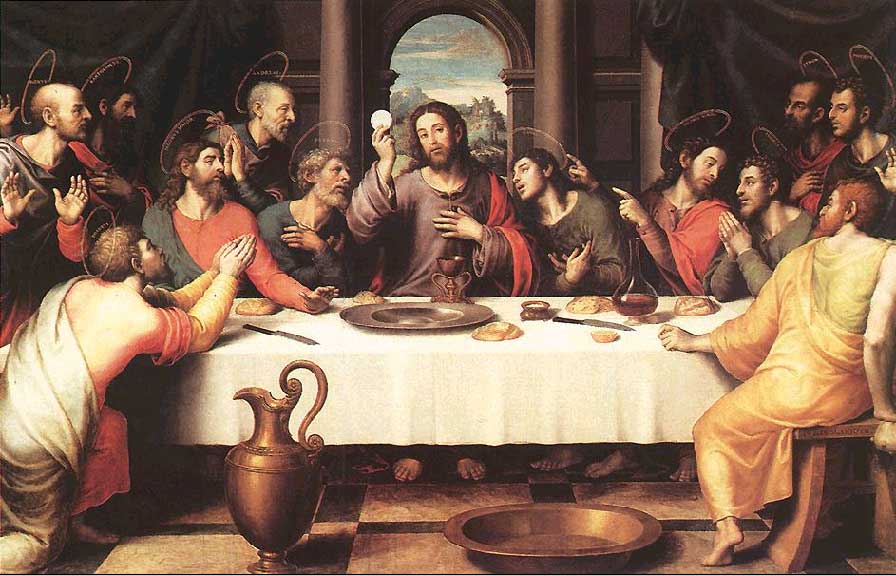 I must admit that for some time I have dreaded having to deal with this passage. The reason is not because this passage has been a subject of age long debates within Christian circles as to the meaning of eating the body and drinking the blood, but rather because I keep coming back to a sense of intense personal discomfort with the whole idea. Because of this, I’ll begin with the last verse of this section (John 6.60) where we read of a similar reaction from Jesus’ disciples: “This is a hard saying; who can listen to it?”
Reading this in retrospect, actually from a distance of 2000 years, we can say the disciples were wrong about the second part of their statement – “who can listen to it?” The fact remains that in one form or another, all Christ-followers worldwide, have indeed participated in a ritual rooted in these very words. We now know that while their fears were understandable, they did not materialize. Quite the opposite is the case. No matter how the ritual is practiced, it remains if not central as in Catholic and Orthodox Christian traditions, it is at least very important (and in some cases also central) for most Protestant denominations worldwide.
The disciples were, however, right about one thing – this was indeed a hard saying! It may seem offensive to explain why this idea is hard “to stomach” (pan intended). Simply speaking, it sounds like cannibalism. Basically cannibalism is defined as eating human flesh or human internal organs. It comes from the Spanish Canibales and is thought to refer (at least allegedly) to the flesh eating practices of the Carib people. In fact when early Christ-followers were still a persecuted minority in the Roman Empire, along with other accusations of criminal behaviors, the Christ-followers were also accused by their Roman enemies of cannibalism. Only after time were the early Christ-followers cleared of this false charge.
So, yes, this was a hard saying. At least I continue to think so. Having said that, I think we can see the passage in several ways. I think there are four ways we can approach this issue. Each view has consequences for how God is viewed.
Neither the King, nor the Father: One view would be a secular way of dealing with the passage. We can see this statement as wrong or an unfortunate/unwise thing to say. It was a poor choice of words or a wrong metaphor. In this case it could be said that God is neither Father, nor is he King and our approach would reflect this belief.
The King, but not the Father: A religious way to deal with this same issue would be to say, that despite the intense discomfort, we should not question God. We must simply accept it “as is” without doubt and leave it without discussion. Who are we to doubt Jesus’ wisdom! In this case God is the King, but not the Father.
The Father, but not the King: A liberalized religious approach to this would be to say: while God did speak to us in his Son, we need to realize that mistakes were made, but the spirit of love and compassion should occupy our minds and not the hypercritical dissection of words and details. Who cares if it was flesh and blood, it might as well have been the heart of Jesus (instead of flesh and blood). It could have been any other metaphor he could have chosen at the time! In the end, it is all about being close to him. In other words, he is the Father, but not the King.
The Father and the King: I believe there is another way – the way of faith and trust, being honest and using your mind. Here’s how this approach works: While trusting God who loudly and clearly spoke in his son Jesus, we come to Him with our doubts, discomforts, and suspicions, not dismissing any of them. Like children who know the mercy, goodness, and patience of their father; we lay it all out before him, seeking to understand his thoughts and logic, based on one important premise – He is both good and right. In other words, he is both the King and the Father.
It should be obvious that my approach can be best described as guided by the very simple conviction that the God of Israel is both Father and King. In the words of the famous Jewish traditional prayer, I believe God should be approached as “Aveinu Malkeinu” – Our Father and our King.
So, did Jesus perform a mistake? Did he confuse the metaphors? Was it the lack of his Greek education in rhetoric that got him in trouble? You can probably guess my answer to this question is a clear “No.” I will continue with this passage in the next section of the commentary, hopefully in another week. What is your opinion? Is this a good approach? If yes, then why? If no, why not? Make your comment now!
To receive more information about learning Biblical Languages recommended by Dr. Eli – click here.
© By Eli Lizorkin-Eyzenberg, Ph.D.
To sign up for weekly posts by Dr. Eli, please, click here. It is recommend by Dr. Eli that you read everything from the begining in his study of John. You can do so by clicking here – “Samaritan-Jewish Commentary”.