Where Is the Lamb? A Reading of Genesis 22
In Genesis 22, the story of the Binding of Isaac, God is called by two different names at two decisive moments. It is Elohim who tests Abraham, asking him to take the son he loves and offer him as a burnt offering. It is the messenger of Adonai who calls from heaven and stops him. Between those two voices, we hear a third. Isaac is walking beside his father, carrying the wood, when he asks a question that brings the whole story into focus. “Where is the lamb?”
“My son”
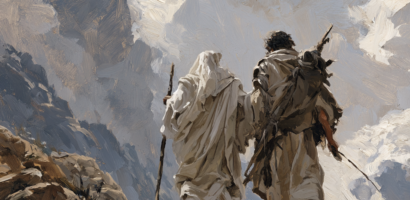
Abraham puts the wood for the burnt offering on Isaac’s shoulders. He himself carries the fire and the knife. Then Genesis tells us, in a few words that will be repeated before they reach the altar, that “the two of them walked on together” (Genesis 22:6).
Isaac breaks the silence. “My father.” Abraham answers, “Here I am, my son.” He uses the same word he spoke when God called him at the beginning of the chapter, hineni, “Here I am.” This time it is his son who needs him to answer.
“Look, the fire and the wood, but where is the lamb for a burnt offering?” (Genesis 22:7)
Isaac knows enough about a burnt offering to know that something is missing. He can see the fire. He is carrying the wood. And so he asks the question that Abraham, who has had three days to think about what awaits them, must have known he would eventually hear.
This is the first time in the Bible that we encounter the Hebrew word שֶׂה (seh), a word for an animal from the flock, often translated here as “lamb.” What an extraordinary place for this word to appear for the first time. The first person in Scripture to ask about the lamb is the son who is carrying the wood.
Abraham’s answer is familiar.
אֱלֹהִים יִרְאֶה־לּוֹ הַשֶּׂה לְעֹלָה בְּנִי
Elohim yir’eh-lo haseh le’olah, beni.
“God will provide for Himself the lamb for the burnt offering, my son.” (Genesis 22:8)
In the familiar reading, the sentence ends with a father addressing his son. God will provide the lamb, Abraham says, and then he adds beni, “my son.” The word is as tender here as it was a moment earlier, when Abraham answered Isaac’s call.
But listen to those last three words together, haseh le’olah beni. If we let the pause come earlier, we can hear an unsettling echo. “God will provide for Himself … the lamb for the burnt offering is my son.”
The familiar reading gives Isaac an answer. The other way of hearing the words gives voice to what Abraham is carrying up the mountain. God’s command at the beginning of the chapter had made Abraham hear one description after another, “your son, your only son, whom you love, Isaac” (Genesis 22:2). Now all those words seem to be gathered up in the one word Abraham says to Isaac himself. Beni. The son he loves is the very one he has been told to offer.
And yet Abraham has said something that will prove true in a way he cannot see while he is speaking. God will provide. For now, all Isaac has is his father’s answer. Then we hear the words again.
“And the two of them walked on together.” (Genesis 22:8)
How old was Isaac?
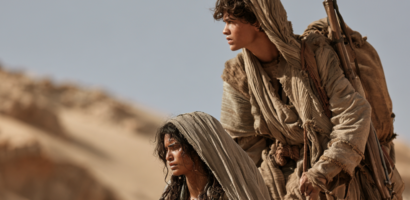
When we picture the two of them walking, many of us imagine an old man and a boy. That is how Isaac often appears in paintings and retellings. But Genesis gives us no age for Isaac here. It tells us that he can carry the wood and that he understands enough to ask about the offering. How old, then, might he have been?
Jewish tradition gives a surprising answer. The very next chapter records the death of Sarah at the age of 127. Genesis Rabbah (58:5) connects her death to the binding of Isaac. In this reading, when Sarah heard that her son had been prepared for slaughter and had nearly been killed, her soul departed. Sarah was ninety when Isaac was born. If, as the midrash understands it, her death followed immediately upon the events on Mount Moriah, then Isaac was thirty-seven.
Try picturing the scene again with a thirty-seven-year-old Isaac. Abraham is an old man. Isaac is in the strength of adulthood. If he understood what was about to happen when his father began to bind him, he could have resisted. Genesis gives us no account of a struggle, and it gives us no words from Isaac after his question about the lamb. In that silence, Jewish tradition hears the possibility of his willing participation.
I find it significant that the words “the two of them walked on together” occur on both sides of the conversation. The first time, the narrator has already told us what God asked of Abraham. Isaac is still looking for a lamb. The second time, Isaac has heard an answer whose full meaning remains hidden from him. We are never told exactly when he understood. And yet the same words describe their steps before and after he asks.
We often read the Aqedah, the Binding of Isaac, as the culmination of Abraham’s faith. The tradition about Isaac’s age makes room for another question. What might it have cost Isaac to place his life in his father’s hands? Years later, Jacob will speak of his father’s God as Paḥad Yitzḥak, “the Fear of Isaac” (Genesis 31:42). Genesis leaves that expression unexplained. Still, when I hear it after reading the story of the binding, I find myself thinking of Isaac as the man who once lay on that altar and heard a voice from heaven.
The voice that stops Abraham
When the voice comes, Genesis changes the name it uses for God. At the beginning, we read that Elohim tested Abraham (Genesis 22:1). At the decisive moment, the messenger of Adonai calls from heaven (Genesis 22:11).
Elohim is the Hebrew word that can refer to God or, in other contexts, to gods. Adonai is what we traditionally say aloud when we encounter the personal name of Israel’s God, יהוה, in the text. In English, we see “God” and “the LORD,” and it is easy to read past the difference. In Hebrew, the change comes at the very moment Abraham has to listen again.
Jewish tradition associates Elohim with divine justice and Adonai with divine mercy. It hears this distinction already in the opening chapters of Genesis. In the first account of creation, God is called Elohim. In the second, He is called Adonai Elohim. The traditional reading sees in these two names the joining of mercy to justice, because the world could scarcely endure under justice alone.
Read in that light, the change of names on Mount Moriah takes on particular force. The test begins with Elohim. When Abraham stretches out his hand for the knife, the messenger of Adonai calls his name twice. “Abraham, Abraham!” Once more Abraham answers, “Here I am.” He has come all this way in obedience to the first command. Now obedience requires him to hear the next one. “Do not lay your hand on the boy” (Genesis 22:12).
This is the third time Abraham says hineni in the chapter. The first time, he answers God before he knows what will be asked of him. The second time, he answers Isaac while carrying a command his son knows nothing about. The third time, he has already reached for the knife. The same words with which he received the command at the beginning are the words with which he receives the command to spare his son.
Only then does Abraham lift his eyes. He sees a ram caught by its horns in a thicket and offers it “instead of his son” (Genesis 22:13).
On the way up the mountain, Abraham says Elohim yir’eh, “God will provide.” After the messenger of Adonai stops his hand and Abraham sees the ram, he names the place Adonai Yir’eh, “The LORD will provide” (Genesis 22:14). The same Hebrew verb, drawn from the word for “to see,” runs through both moments. The name changes.
Perhaps that is what I find most moving about the two names in this chapter. We first hear Elohim when Abraham is asked to give up the son he loves. We hear Adonai when he is told to take his hand away. And the name Abraham gives the place preserves what he learned there about the God who tested him. When Isaac asked where the lamb was, Abraham could only say that God would provide. Now he can see what that provision means for the son who asked. Abraham enters the test under the command of Elohim, the God whose justice makes an absolute demand; but at the decisive moment, it is Adonai who calls from heaven and stops his hand. Justice brings Abraham all the way to the altar, but mercy does not allow the knife to fall.
The God of Israel is both—and perhaps the whole tension of the Akedah is held between these two Names.Once again, something that seems almost invisible in translation becomes a theological statement in Hebrew: even the Names of God are telling the story.