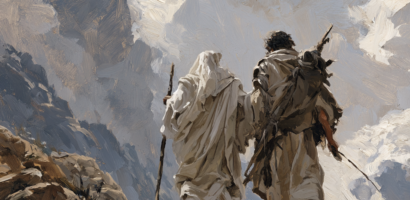
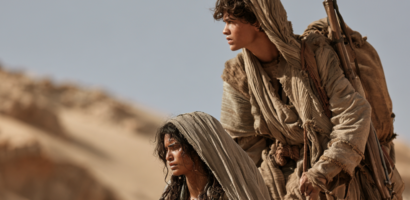
The story of Hagar and Ishmael in Genesis 21 is one of the most heartbreaking stories in the Bible. A mother and her teenage son are expelled from their home, wander through the wilderness, run out of water, and find themselves facing death. The mother, unable to watch her son die, sits down at a distance and begins to weep. Then, at the very last moment, God intervenes, opens her eyes, and shows her a well of water that saves their lives.
Most readers remember this story because of this miraculous provision of water. However, I believe that in order to understand the full significance of this miracle, we need to compare it with another encounter Hagar had with God many years earlier, in Genesis 16. For this was not the first time she had met Him in the wilderness. It was her second epiphany, and when we compare these two encounters, we discover something profound about the way God works in our lives.
The Same Woman, the Same Wilderness
Let us return for a moment to Genesis 16, where we first meet Hagar, a young Egyptian servant in Abraham’s household. After becoming pregnant with Abraham’s child, she finds herself in a painful conflict with Sarah, her mistress, and finally, unable to endure the situation any longer, she flees into the wilderness. There, beside a spring of water, the Angel of the Lord finds her, speaks to her, calls her by name, and promises her a son whose descendants will become exceedingly numerous. This encounter transforms Hagar so deeply that she gives God a name: אֵל רֳאִי — El Roi — “The God Who Sees Me.” She discovers something extraordinary: even here, in the wilderness, far from Abraham’s household, she is not forgotten, because God sees her.
Now, some fifteen or sixteen years later, Hagar is in the wilderness again! If someone decided to create a play based on Hagar’s story, they could use almost the same scenery for both scenes: Hagar, the wilderness, and the Angel of God. But how different these two scenes are! In Genesis 16, Hagar was alone, while now she has her son with her, and this one difference changes everything. In the first scene, she was an angry and desperate young woman, running away from circumstances that seemed unbearable to her. In the second, she is a mother whose beloved son’s life is in danger, and nothing can be compared with the anguish of a mother’s heart when her child is suffering.
There are other differences as well, and I find them particularly significant. In Genesis 16, Hagar was beside a spring of water; she knew where she was going, or at least she thought she did, and although she was suffering emotionally, her life was not in immediate physical danger. In Genesis 21, however, she is wandering in the wilderness of Beersheba, and it seems that she has lost her way. Can you imagine? The young woman who had once found her way through the wilderness is now lost! I imagine that being with Ishmael, feeling an enormous responsibility for her son’s life, made her more nervous, more vulnerable, and less confident than she had been when she was alone. Perhaps this was precisely why she lost her way in the wilderness that she had once known so well.
And then comes the most terrible difference of all: in Genesis 16, Hagar was next to a spring of water and was not thirsty, while in Genesis 21, their water is gone, and she and her son are literally dying without water.
When the God Who Sees Seems Not to See
Before we proceed, I would like us to look at this situation through Hagar’s eyes, because I believe that only then can we begin to understand the depth of her despair. How terribly unjust everything must have seemed to her! She had spent many years in Abraham’s household, learning to obey, submit, and humble herself, and now she was once again reminded that she had very little control over her own life. Perhaps Ishmael had done nothing seriously wrong; perhaps his only fault had been that he was a much-loved and admired older brother to Isaac. Yet he was being expelled from his father’s family, and Abraham, who certainly loved Ishmael dearly, had failed to protect him.
How disappointed Hagar must have been! But I imagine that her greatest disappointment was with God Himself, the One whom she knew as El Roi, “The God Who Sees Me.” Where was He now? Did He not see what was happening to her and her son? And if He saw it, why did He not intervene? I believe these questions must have tormented Hagar as she walked through the wilderness, until finally, when the water was gone and Ishmael could walk no farther, she placed him under a shrub and sat down at a distance, unable to bear the thought of watching him die.
“Then she went and sat down across from him at a distance of about a bowshot; for she said to herself, ‘Let me not see the death of the boy.’ So she sat opposite him, and lifted her voice and wept.” (Genesis 21:16)
What a devastating picture! The woman who had once named God “The One Who Sees Me” now cannot bear to see her own son die. And at this very moment, something extraordinary happens.
The God Who Hears
The next verse contains a remarkable detail that we should not overlook. We have just read that Hagar lifted her voice and wept, so naturally, we expect Scripture to tell us that God heard her crying. But this is not what the text says:
“And God heard the voice of the boy.” (Genesis 21:17)
In Hebrew, we read: וַיִּשְׁמַע אֱלֹהִים אֶת־קוֹל הַנַּעַר — Vayishma Elohim et kol hana’ar, literally, “And God heard the voice of the boy.” How interesting! Hagar is the one whose weeping is explicitly mentioned, yet Scripture tells us that God heard Ishmael. Did Ishmael cry out? Did he pray? We don’t know; Scripture doesn’t tell us. But we do know something else: his very name had promised that God would hear.
The Hebrew name יִשְׁמָעֵאל — Yishma’el (Ishmael) means “God hears” or “God will hear.” Years earlier, when the Angel of the Lord had spoken to Hagar in Genesis 16, He had told her: “You shall call his name Ishmael, because the LORD has heard your affliction.” (Genesis 16:11). And now, in Genesis 21, we encounter the same Hebrew verb: וַיִּשְׁמַע — vayishma — “and He heard.” Isn’t that remarkable? The boy whose name means “God hears” has been heard by God, and the promise embedded in his name is being fulfilled before our eyes!
The Angel calls to Hagar from heaven: “What ails you, Hagar? Fear not, for God has heard the voice of the boy where he is.” (Genesis 21:17). The Hebrew expression בַּאֲשֶׁר הוּא — ba’asher hu, “where he is,” is especially meaningful here. God hears Ishmael right where he is, not in Abraham’s house, not in the safety of his father’s protection, but in the wilderness, under a shrub, at the very moment when his mother has lost all hope. And now, for the second time in Hagar’s life, the Angel of God speaks to her.
Hagar occupies a unique place in the biblical narrative for many different reasons, but these two encounters make her especially remarkable. She is the only woman in Scripture whose story records two separate appearances of the Angel of God speaking directly to her. Yet what interests me most is not simply the extraordinary fact that God spoke to her twice, but the astonishing difference between these two encounters. Why did God respond to Hagar in such different ways? And what can we learn from this difference?
Two Epiphanies, Two Miracles
We learn much about Hagar when we compare these two scenes, but the greatest blessing for me personally comes from seeing how God responded to her in each of them. I love witnessing how He touches her life and unlocks her heart in two completely different ways, because I believe that in both cases, He knew exactly what she needed, even when she herself did not.
In Genesis 16, God met a young woman overwhelmed by anger, bitterness, disappointment, and self-pity. Certainly, she thought her circumstances were very difficult, and they were; certainly, she thought she was going through terrible hardships, and she was. But more than anything else, she needed to be changed from within. The terrible storms and endless torment of her soul—the love and the hatred, the accusations and the guilt, the bitterness and the pity, all intertwined and twisted—made her hurt constantly, and therefore, what she needed most was peace in her heart.
And what did God do? Did He change her circumstances? No! He sent her back to the same household, to the same mistress, to the very situation she had run away from! Isn’t that astonishing? Instead of changing her circumstances, God changed her heart. The Angel’s words gave her something she had not possessed before: the assurance that God saw her, knew her suffering, and had a purpose for her life. I believe this encounter brought Hagar the inner peace she so desperately needed, and this transformation was so profound that she was able to return to the very circumstances she had considered unbearable.
God changed absolutely nothing in the visible realm, yet He transformed Hagar’s heart completely. He did not rescue her from her circumstances; He transformed her heart so that she could face them.
Now let us look at Genesis 21. This time, God does not send her back, and He does not simply comfort her or promise her a distant future. This time, she and Ishmael are physically dying, and God steps in to save their lives.
“Then God opened her eyes, and she saw a well of water. And she went and filled the skin with water, and gave the boy a drink.” (Genesis 21:19)
What a wonderful miracle! But notice how Scripture describes it. It does not say that God created a new well; it says that God opened her eyes, and she saw a well. Perhaps the well had been there all along, hidden from her desperate eyes, and all God had to do was enable her to see what she had been unable to see before.
And here we arrive at what I believe is the most important distinction between Hagar’s two encounters with God: in Genesis 16, God changed her heart without changing her circumstances, while in Genesis 21, He opened her eyes and provided for her desperate physical need. The first miracle was invisible; the second was visible. But which miracle was greater?
The Well Was There
There is something particularly beautiful about the sequence of events in Genesis 21. Before God opens Hagar’s eyes, He speaks to her; before she sees the water, He renews His promise concerning Ishmael: “Arise, lift up the boy and hold him with your hand, for I will make him a great nation.” (Genesis 21:18). Only then does He open her eyes, and she sees the well.
I wonder how often something similar happens in our own lives. We find ourselves in circumstances that seem impossible, we pray, cry, struggle, and wait for God to change the situation, and we ask Him to create a way where there is no way. But perhaps the answer is closer than we think. Perhaps the well is already there, and perhaps what we need most is for God to open our eyes.
This does not mean that our difficulties are imaginary or that every problem can be solved simply by changing our attitude. Hagar’s suffering was terribly real, and without water, she and her son would have died. But the God who knew exactly what she needed also knew how to provide it, and in this particular moment, instead of creating something new before her eyes, He opened her eyes to what she had not been able to see.
I believe that the same principle applies to our lives. God knows—and only He knows—when it is our hearts that need healing, even though our circumstances seem terribly harsh, and when our situation truly needs changing and we need a visible breakthrough. He knows when we need strength to endure and when we need deliverance from what we are enduring. And in His time, He will open our eyes and show us what we need to see.
Perhaps the story of Hagar is meant to teach us a profound lesson. Yes, we desperately want our visible circumstances to change, and we pray for that change with all our hearts, but perhaps before those circumstances can be truly and lastingly healed, an invisible transformation must take place first. The healing of the heart comes first. Without it, even the most dramatic changes in our external circumstances may leave the deepest wounds untouched.
This is one of the central themes of my book, Abraham Had Two Sons, where I explore the painful story of Abraham’s family, the different destinies of his two sons, and the spiritual lessons hidden in their lives. Today, when the ancient land of Abraham is once again torn by war and suffering, I believe that understanding this story is more important than ever, because it reminds us that the healing we so desperately need must begin not only around us, but also within us.
We would not be able to see the well in the wilderness unless we knew, with every fiber of our being, that the One Who Sees us lives. This was the discovery that transformed Hagar’s heart during her first encounter with God, and it prepared her to recognize His faithfulness when He met her again, years later, in a much more desperate situation.
Perhaps this is where the healing of our own broken world must begin as well. We long to see the visible miracle of peace, but before that miracle can become a lasting reality, our hearts must learn again to trust the God who sees, who hears, and who has not forgotten His promises.
The well may already be there. But first, our eyes—and our hearts—must be opened.