The Jewish Studies Blog

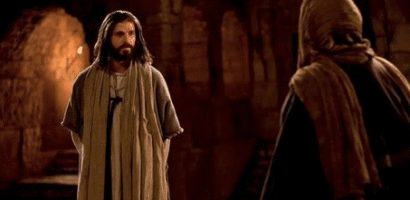
Who Was Nicodemus? (john 3.1-8)

Who Was Nicodemus? (john 3.1-8)

As a member of a less powerful (Pharisaic party vs. that of the Sadducees), Nicodemus was a minority within minority. It is interesting that every known case of persecution against Jesus and Jerusalem believers in Jesus, especially their leaders, “was taken when the reigning high priest was one of those who belonged to the powerful Sadducean family of Annas”. Caiaphas, Annas’ son-in-law condemned both Jesus and Stephen. James the Son of Zebedee was executed and Peter arrested by Agrippa I, while Matthias, son of Annas, was probably a priest. In Acts 12:3 we are told that the king was motivated to gain the favor with “the Jews”, that is to “placate the high priest Mathias and his family” since some time before Agrippa humiliated Annas family by deposing Theophilus, brother of Mathias. Another son of Annas, Ananus II, put James to death taking advantage of Roman Emperor’s before appointment of the next leader of the Empire. The above shows that we are justified to speak of a case of family vendetta against “the followers of a man whose movement Caiphas (as a member of Annas priestly family) had expected but failed to stamp out.”
The Sacrifice Of Isaac In Qumran Literature (dr. Joseph A. Fitzmyer, S.j., Catholic University Of America)

The Sacrifice Of Isaac In Qumran Literature (dr. Joseph A....

One realizes how important the Qumran text, fragmentary though it be, is not only for the background of New Testament references to the sacrifice of Isaac, but especially for the later targumic and rabbinic teaching about the Aqedah, as the Jewish expression of that sacrifice as an expiatory and redemptive act for all Israel.

Dry Bones And Heavenly Bliss: Tombs, Post-mortal Existence And Life-after-death In Ancient Judaism (prof. Jürgen Zangenberg, Leiden University)

Dry Bones And Heavenly Bliss: Tombs, Post-mortal Existence And...

The Talpiyot tomb is much too precious to leave it to sensationalist flurry or religious quarrels about what can, should or must not have happened on that memorable day in April 30 in Jerusalem when Jesus was said to have risen from the grave. The tomb of Talpiyot has a tale to tell that is worth considering
on its own. It brings us in contact with a world far away from ours and with people long gone.

The Jewish Study Bible (edited By Adele Berlin, Marc Zvi Brettler, Michael A. Fishbane)

The Jewish Study Bible (edited By Adele Berlin, Marc Zvi Brettler,...

The Jewish Study Bible is a one-volume resource tailored especially for the needs of students of the Hebrew Bible. It is an excellent resource for the use by Christian pastors and lay believers. Nearly forty scholars worldwide contributed to the translation and interpretation of the Jewish Study Bible, representing the best of Jewish biblical scholarship […]

Sabbath Keeping In Qumran (dr. Eli Lizorkin-eyzenberg, Eteacher Biblical Language Academy)

Sabbath Keeping In Qumran (dr. Eli Lizorkin-eyzenberg, Eteacher...

By the time the Damascus Document was written it was clear that the Biblical Sabbath commandments alone were not specific enough and were in need of clarification (X, 14-17a). The obedience desired was not just superficial and external, but rather heartfelt and personal, not overlooking issues of social justice in the process and seeking to implement full obedience to the Torah (X, 17b-19). While it is true that heartfelt obedience risked to make Sabbath regulations more binding that they were suppose to be, it is also true that Qumran community sought to achieve not simply an outward obedience to these commandments, but to balance it with the proper motivation in the heart of the worshiper (XI, 2-3). In addition the practices designed to “get around” God’s prohibitions should have been avoided (XI, 7b-11a). (It is highly likely that Erub was already either implemented by some or perhaps was in some early stage of its invention).[30] Furthermore, Sabbath obedience in Qumran was more valued than the life of any living being other than man (XI, 16-17a). This and other sections shed light on the nature of Jesus’ polemic with the Pharisees. His critique of the opposing Pharisees (Matt.12:9-14) in the light of CD, had to do not with obeying the letter of the Law, but rather not applying correct interpretive principles consistently (see section in Sabbath-Keeping at birth of animal or human (XI, 11b-14a)). Finally, Sabbath keeping was more important than Temple worship (XI, 17b-18a).

The Digital Dead Sea Scrolls (the Israel Museum And Google Project)

The Digital Dead Sea Scrolls (the Israel Museum And Google Project)

The first seven Dead Sea Scrolls were discovered by chance in 1947 by Bedouin of the Ta’amra tribe, in a cave near Khirbet Qumran on the northwest shore of the Dead Sea. Three of the scrolls were immediately purchased by archaeologist Eliezer Lipa Sukenik on behalf of the Hebrew University; the others were bought by […]

Reinterpreting “if You Are The Messiah, Tell Us Clearly?!” (jn. 2.18-25 )

Reinterpreting “if You Are The Messiah, Tell Us...

This text is most often read as an instance of Jesus’ general lack of clarity in declaring his Messiahship. However, your current author holds that this is unwarranted. The request of Hoi Ioudaioi should not be read: “How long will you keep us in suspense? If you are the Anointed one, tell us plainly,” but “How long will you keep us in suspense? If you are the Anointed One, tell us plainly.” From the standpoint of Hoi Ioudaioi, given their religious authority as the formal representatives of the Judean religion, their authority to validate Jesus’ candidacy for Messiahship was not being honored.

Reassessing Jewish-christian Relations (prof. Amy-jill Levine, Vanderbilt University)

Reassessing Jewish-christian Relations (prof. Amy-jill Levine,...

Prof. Amy-Jill Levine is a long-time unofficial mentor and a friend. In my opinion she is one of the brightest and bravest scholars of today. This lecture is entitled “Reassessing Jewish-Christian Relations”. Its an excellent introduction to the topic. To receive more information about learning Biblical Languages with the Hebrew University of Jerusalem/eTeacher Biblical program […]

Cleansing Temple: Why Is John So Different From Synoptics? (jn.2.14-17)

Cleansing Temple: Why Is John So Different From Synoptics?...

It is striking that the synoptics use a different quotation from the Old Testament to describe the reason for the temple cleansing. While the synoptics quote Jesus saying “Is it not written, ‘My house shall be called a house of prayer for all the nations ‘? But you have made it a robbers’ den” (Mk.11:17, Mt.21:13, Lk.19:46), John on the other hand justifies Jesus’ action in different way. We read in John 2:17: “His disciples remembered that it was written, “Zeal for your house will consume me.” For the Synoptic Gospels the issue seems to be the loss of Israel’s meaningful engagement with Gentiles (light of the world). For John, the issue is the appropriateness and purity of the place used for Jerusalem worship.

A Niche Market For John’s Gospel

A Niche Market For John’s Gospel

Jesus speaks of his ministry to the other sheepfolds, uniting them under his rule in Jn.10:16 “And I have other sheep, which are not of this fold; I must bring them also, and they shall hear My voice; and they shall become one flock with one shepherd.” Historically this has been interpreted to mean simply uniting Jews and Gentiles together in the one body of Christ. The current authors are committed to the understanding that Israel’s God unites all nations of the world into one Body through Jesus’ love, his sacrifice, and his rule. However, while we agree that this text applies to “all” by extension, it seems to us that first of all it should be applied to the reunification of Northern and Southern Israel.