The Jewish Studies Blog

Who Are “the Jews” In The Gospel Of John?

Who Are “the Jews” In The Gospel Of John?

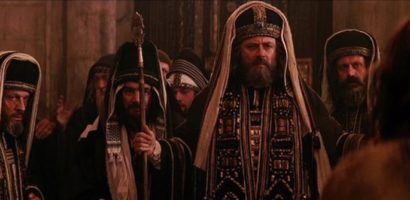
Throughout Christian history, the Gospel of John has stood among the most favorite books of the Bible, alongside perhaps only the Psalms, Isaiah and the book of Romans. This gospel has also been a source of debate. One of the main reasons for this is its “anti-Jewish” rhetoric. The problem here is that the harsh words to “the Jews” were not addressed to a particular Jewish group as in other Gospels. After all, harsh rhetoric is also present in the so-called “most Jewish” of all the four gospels, the gospel of Matthew (Matt. 23) and is consistent with the standards of speech that were acceptable for the Israelite prophetic tradition (Is.1:2-4). However, in Matthew, as well as in Mark and Luke, in most cases it can be clearly seen that Jesus argued with Jewish groups like Scribes and Pharisees, but not with all Jews. It is peculiar that only in the Gospel of John is the un-nuanced “the Jews” (in most English translations) used repeatedly, usually referring to the opponents of Jesus who were often seeking to kill him (5:18; 7:1-10; 8:1-22, 8:40; 10:29-33; 11:8; 18:14; 18:28). Most-strikingly, it is to “the Jews” who initially followed him in this Gospel alone that Jesus said: “Your belong to your father, the devil.” (8:31) So, are Christian Bibles translating the Greek words “Hoi Iudaioi” accurately as “the Jews” in today’s sense of the word? Our guess is – probably not (to read more about it follow this link).
Jewish Responses To The Emergence Of Christianity (prof. Peter Schafer, Princeton University)

Jewish Responses To The Emergence Of Christianity (prof. Peter...

Peter Schäfer joined the faculty in 1998, appointed as the Ronald O. Perelman Professor of Judaic Studies and Professor of Religion. His teaching and research interests include Jewish History in Late Antiquity, the religion and literature of Rabbinic Judaism, Jewish Mysticism, 19th and 20th century Wissenschaft des Judentums, and Jewish Magic. In 1994 he was […]

Are “the Jews” Really “judeans”? (john 2:1-10)

Are “the Jews” Really “judeans”? (john...

We read in 2:6: “Now there were six stone waterpots set there for the purification of hoi Ioudaioi, containing two or three measures each”. It is often argued that the best way to translate hoi Ioudaioi is simply – Judeans. It is also often argued, that hoi Ioudaioi were Jerusalemite authorities. Both of the theories fall short in explaining references like these when hoi Ioudaioi were permanently present outside of Judea. Jn.2:6 is not the only example that shows a geographical Judean location was not a necessary condition for people to be classified as hoi Ioudaioi. Cana was in Galilee.

Nathaniel, You Have Not Seen Anything Yet (john 1.47-51)

Nathaniel, You Have Not Seen Anything Yet (john 1.47-51)

In vs. 51 Jacob’s dream is evoked. According to the Biblical story, Jacob most likely dreamed about an ancient ziggurat-like structure that in the mind of the ancients normally had a temple on the top of that mountain with stairs leading to it. The angels were ascending and descending upon Bethel (house of God), where Jacob slept on a stone anxious about Esau’s reception of him after many years away and that under questionable circumstances. Samaritans thought that Bethel and Gerizim were one and the same place since Bethel is connected with Luz and Luz is connected to Mt. Gerizim. Up until today the Samaritan village of Luza is located essentially next to the Mt. Gerizim.

What Was Wrong With Nazareth? (john 1.43-46 )

What Was Wrong With Nazareth? (john 1.43-46 )

Nathaniel’s first reaction to Philip’s claim that he and others found the Messiah was rather disappointing in 1:46: “Can any good thing come out of Nazareth?” Though Nazareth was a very small village. It fact according to archeological conclusions it boasted no more than 150 residents. It was over showed by the Roman with a large Jewish population city just 30-45 minutes’ walk a way that served as an administrative city center – Tzipori (Sepphoris). Jesus must have spent time there as a child and youth, accompanying his Nazareth-resident parents to it for all kinds of matters pertaining to life in Roman Palestine.

The Jewish Annotated New Testament (amy-jill Levine, Vanderbilt University And Marc Z. Brettler, Brendais University)

The Jewish Annotated New Testament (amy-jill Levine, Vanderbilt...

Description Although major New Testament figures–Jesus and Paul, Peter and James, Jesus’ mother Mary and Mary Magdalene–were Jews, living in a culture steeped in Jewish history, beliefs, and practices, there has never been an edition of the New Testament that addresses its Jewish background and the culture from which it grew–until now. In The Jewish […]

Why Does John Often Translate And Explain Words? (gospel Of John 1:35-42 )

Why Does John Often Translate And Explain Words? (gospel Of John...

In the Judaism of the Second Temple period the word “Rabbi” did not mean the same thing that it means today. It was not an ordained position within the Jewish community as it is today with specific roles. It simply was used as a title of respect along with the acknowledgement that this person had things to teach others (function of a teacher). So was Jesus a rabbi? “Yes” and “no,” More “no” than “yes.”

Why Passover Of The Jews? Where There Also Other Passovers? (john 2.13)

Why Passover Of The Jews? Where There Also Other Passovers? (john...

On a number of occasions, the gospel states that Jesus celebrated a Jewish Passover (5:1; 6:4; 7:2). Given the spread of various Jewish movements in Ancient Roman Empire, no one in the original audience, even when first century Gentiles read this text, needed to be told that Passover was a Jewish holiday.[25] Everyone with any interest towards Christian claims already knew that Passover had something to do with Ancient Israel, since the general Jewish presence was numerous and well spread throughout the Empire.

The King, The Dove And The Spirit (john 1:32-34)

The King, The Dove And The Spirit (john 1:32-34)

The dove-resting symbolism is also important in the context of Jesus’ role as Israel’s King, its good shepherd. A 17th century Christian collection of questions and answers asks the following question: “How does Christ fulfill the office of a king?” A succinct and clear answer is provided for believer’s instruction: “Christ fulfills the office of a king, in subduing us to himself, in ruling and defending us, and in restraining and conquering all his and our enemies.” This answer is profoundly accurate when it comes to highlighting one of the most important functions of an Israelite king – to conquer and defend in order to provide safety. The dove-related imagery in the Bible symbolizes safety, hope, peace and future – exactly the kind of things that Israel’s king was meant to provide for his people. It is in connection with this idea that the Gospel tells us that John the Baptist declared Jesus to be the Royal Son of God. (Jn.1:34)

Passover And Easter: What Do They Have In Common? (john 1.29-31 )

Passover And Easter: What Do They Have In Common? (john 1.29-31 )

Usually, Christians who held to the first view looked at Pascha as the day of Jesus’ sacrificial death. Others though believed that this holiday was meant instead to signify his resurrection. All of this is to say that while anti-Judaism in the early church did contribute to the date separation between Jewish and Christian Passovers, it was not the main factor. There were several other important considerations. Anti-Judaism, though present, was not the driving force behind the creation of a separate Christian identity and culture in the early centuries.