


Shabbat
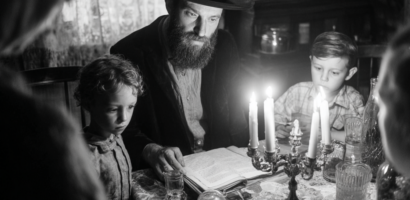
The first thing that Moses did at the beginning of this Portion after he had assembled all the congregation of the Israelites, was to remind the people to keep Sabbath. “Moses assembled all the congregation of the Israelites and said to them: These are the things that the Lord has commanded you to do: Six days shall work be done, but on the seventh day you shall have a holy Sabbath of solemn rest to the Lord; whoever does any work on it shall be put to death.”[1] This is neither the first nor the last time the people of Israel hear about Shabbat from their leader: The importance of Sabbath in the Hebrew Scriptures cannot be overemphasized. What about the New Testament? Does it still regard Sabbath as “a holy day to the Lord”?
There is a well-known dispute regarding Jesus keeping – or breaking – Shabbat, and much has been said and written on this subject. However, even today, as you read about Jesus healing on Shabbat and feeling this almost palpable tension between Him and those who “were watching Him to see if He would heal him on the Sabbath, so that they might accuse Him,”[2] do you still wonder whether indeed, Jesus did break Shabbat?
First, we have to make it clear whose definition of breaking Shabbat we have in mind. In today’s Jewish halakhah, treating minor, non-life-threatening medical issues on Shabbat is prohibited, but saving lives on Shabbat is not only permitted but is also a duty. However, while violation of Shabbat for life-saving healing is an accepted practice today, in the first century this principle had probably not yet been clearly defined. That’s why the synagogue official was indignant because Jesus healed on the Sabbath.[3] In this sense, the testimony of the gospels is extremely significant: for the first time, we see here Jewish Rabbi Yeshua allowing and performing healing on Shabbat.
Of course, Jesus did not break a God-given commandment. However, He did break a contemporary tradition of keeping Shabbat at any cost. Remarkably, the gospels are the only first-century source we have where healing is permitted and performed on Shabbat. In fact, Jesus advocates – perhaps even establishes – the same approach that later, though slightly modified, will become normative in Rabbinic Judaism. The more we know about Judaism, the more interesting this dynamic between the teaching of Jesus and first-century Judaism becomes!
Cheerful Givers
The idea of willing and joyful giving (including almsgiving) is widespread in Judaism, and we can find its expression in different Jewish texts. However, the very first time in the Torah when we see people giving willingly and joyfully for the Lord and His cause, is the building of the Tabernacle. We read that the Israelites in the desert were prompted by God and they brought their offerings joyfully: “everyone whose heart was stirred, and everyone whose spirit was willing, brought the Lord’s offering.”[4] The New Testament continues to see this giving to the Lord as a joyous privilege and even an act of worship. Paul exhorts the New Covenant community of the Corinthians to be “cheerful givers” – just as God exhorted the Israelites to be willing and generous givers.
Filled With Spirit
In the previous portions, we saw “that the Lord has called by name Bezalel son of Uri son of Hur, of the tribe of Judah” and “he has filled him with divine spirit,”[5] giving him wisdom, understanding, and knowledge. We know also that the idea of being “filled with the Spirit of God” is developed in the New Testament by Paul; according to Paul, the Spirit could be, and should be, manifested in each person.[6] However, what about Paul himself? Was he called by God and filled with the spirit? Here, we really see the continuity between the New Testament and the Torah. According to the New Testament, before Paul became Jesus’ servant – and in order for him to become His servant – first Jesus had to single out Paul himself and fill him with the spirit, thus equipping him spiritually – exactly as God singled out Bezalel, filling him with the spirit and enabling him for special service to God. So Ananias went and entered the house. He laid his hands on Saul and said, “Brother Saul, the Lord Jesus, who appeared to you on your way here, has sent me so that you may regain your sight and be filled with the Holy Spirit.”[7] Thus, the NT continues with the same pattern that is apparent in the Torah: in order to serve God, one has to be filled with the Spirit of God first!
The Altar of Incense in Jesus’ Story
Remarkably, there is another detail of this portion that made its way into the New Testament; it has to do with the Jewish worship. We read the description of the altar of incense: He made the altar of incense of acacia wood, one cubit long, and one cubit wide; it was square, and was two cubits high; its horns were of one piece with it.[8] Do we find this altar in the New Testament? Most Christians probably would answer in the negative to this question – and yet, the attentive reader won’t miss the different details of Jewish worship mentioned by the New Testament. Thus, in the first chapter of Luke’s Gospel we read about Zachariah:
“Once when he was serving as priest before God and his section was on duty, he was chosen by lot, according to the custom of the priesthood, to enter the sanctuary of the Lord and offer incense. 10 Now at the time of the incense offering, the whole assembly of the people was praying outside. 11 Then there appeared to him an angel of the Lord, standing at the right side of the altar of incense”[9]
There is no doubt that these details in the New Testament narrative serve the purpose of emphasizing the continuity between the Hebrew Scriptures and the New Testament. By opening his Gospel with a scene in the Jerusalem temple, Luke is undoubtedly “anchoring Jesus in Jewish tradition”[10]. According to Luke, an angel of the Lord announces, not just the miraculous birth of a son to the elderly couple, but he announces the birth of the forerunner of the Messiah. The fact that this angel appears to Zachariah during the evening incense sacrifice, at the right side of the altar of incense, means that the story of Jesus begins in the thoroughly Jewish setting – in the Jewish Temple.
[1] Ex.35:1-2
[2] Mark 3:1-6
[3] Lk. 13:14
[4] Ex.35:21
[5] Ex.35:30-31
[6] 1 Cor. 12:7-11
[7] Acts 9:17
[8] Ex.37:25
[9] Lk.1:8-11
[10] The Jewish Annotated New Testament (p. 2). Oxford University Press. Kindle Edition
I would like to remind you, dear friends, that eTeacher offers a wonderful course, where you can learn from Parashot Shavua commentaries along with their New Testament interpretation. As always, you are welcome to contact me for more information! Also, if you like the articles on this blog, you might enjoy also my books, you can get them here.